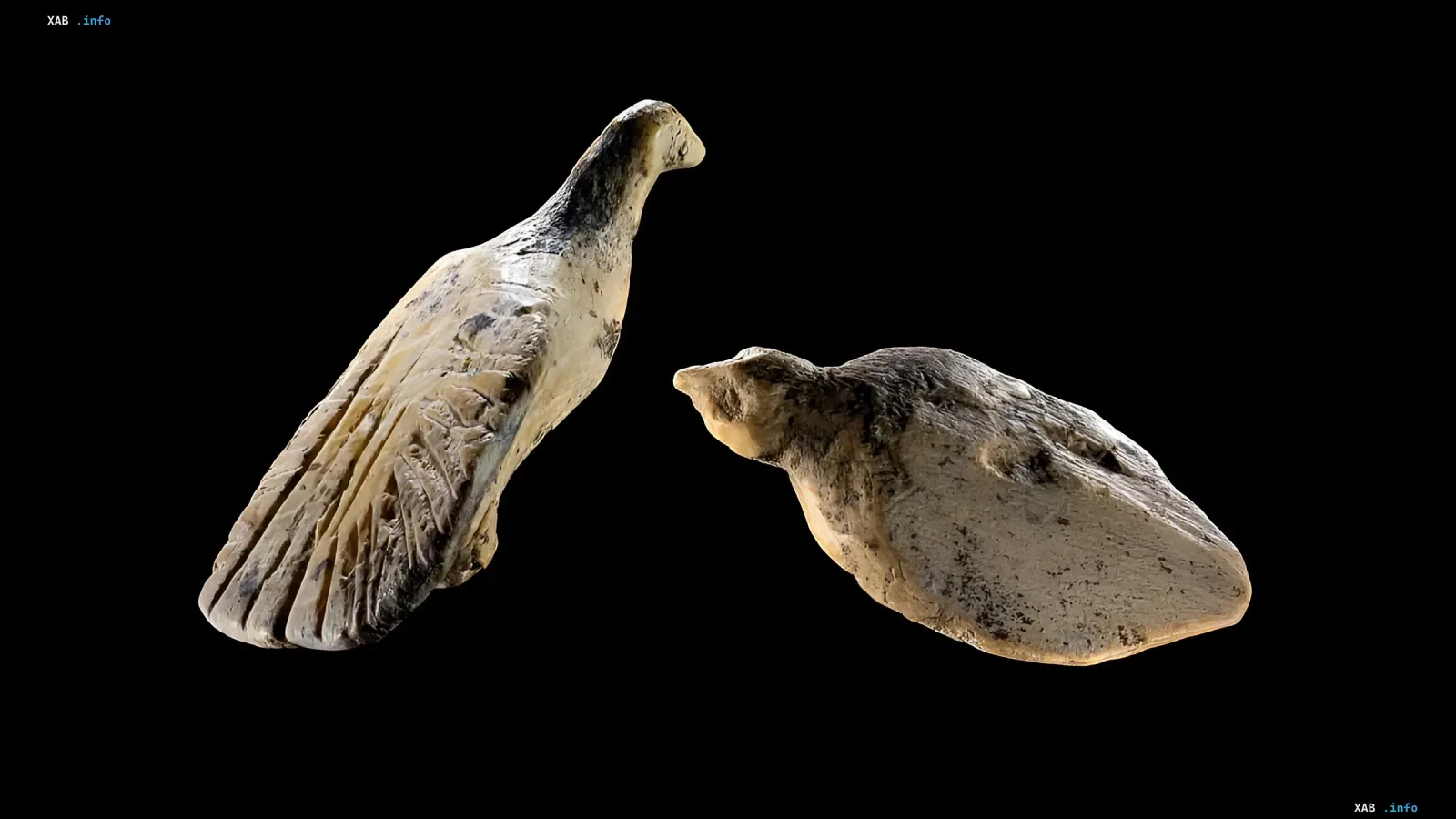
During archaeological excavations in the Hohlenstein-Stadel Cave (Germany), researchers from the University of Tübingen made a unique discovery. In the lower layers of the ancient sanctuary, two miniature bird figurines carved from mammoth ivory were found. These artifacts, created by people of the Aurignacian culture, are remarkable for their tiny size and level of detail.
Art on the Tip of a Finger
The size of the discovered sculptures is so small that they fit on the thumbnail. The first figurine weighs only 1.3 grams, while the second weighs 0.7 grams. One of them, measuring just two centimeters in length, depicts a bird with outstretched wings and is currently considered the smallest known work of Ice Age art ever found in this region.
The second figurine, which is better preserved, depicts a bird in a calm pose, possibly sitting on a nest. Archaeologists found both sculptures only 1.5 meters apart, suggesting a functional or ritual connection between them.
Detail That Amazes Scientists
Despite their microscopic size, the masters of the Late Paleolithic did not limit themselves to simplified silhouettes. Nicholas Conard, an archaeologist from the University of Tübingen and head of the excavations, notes that careful observations of nature were embodied in the figurines with a high degree of detail.
"Mammoth ivory was used here not just to create a simplified silhouette of a bird's body," the scientist emphasizes. Thanks to meticulous carving, researchers can study the plumage, body shape, and posture, attempting to determine exactly which species of bird is depicted and what it is doing.
White Ptarmigan or Capercaillie?
The exact identification of the bird species remains a subject of debate. One version suggests that the figurines depict white ptarmigans—a cold-loving species whose bones are often found at prehistoric sites in this region.
However, there is also an alternative theory: they could be larger pheasant-like birds, such as capercaillies. This forest species is known for its striking appearance and complex mating rituals. The pose of the bird with outstretched wings could depict mating behavior, takeoff, or landing on water, while the elongated figurine lying flat most likely demonstrates the process of incubating eggs.
Context of the Discovery in Hohlenstein-Stadel
The Hohlenstein-Stadel Cave, located in the Swabian Jura, is part of a UNESCO World Heritage Site and is considered one of the most important areas for studying the origins of human art in Europe. It was inhabited by early Homo sapiens during the Aurignacian period, approximately 43,000–28,000 years ago, after the disappearance of Neanderthals from Europe.
During this period, people experienced a significant cultural and artistic boom. Some of the oldest musical instruments and ornaments were created here. Among the famous finds of the cave is the "Venus of Hohlenstein-Stadel," a female figurine about 41,000 years old, considered one of the oldest examples of figurative sculpture in Europe.
Since the beginning of excavations in the 1860s, numerous artifacts dating from 33,000 to 43,000 years old have been discovered here. The new miniature bird figurines will be exhibited in the Museum of Prehistory and Ice Age Art in Blaubeuren until April 4, 2027.


