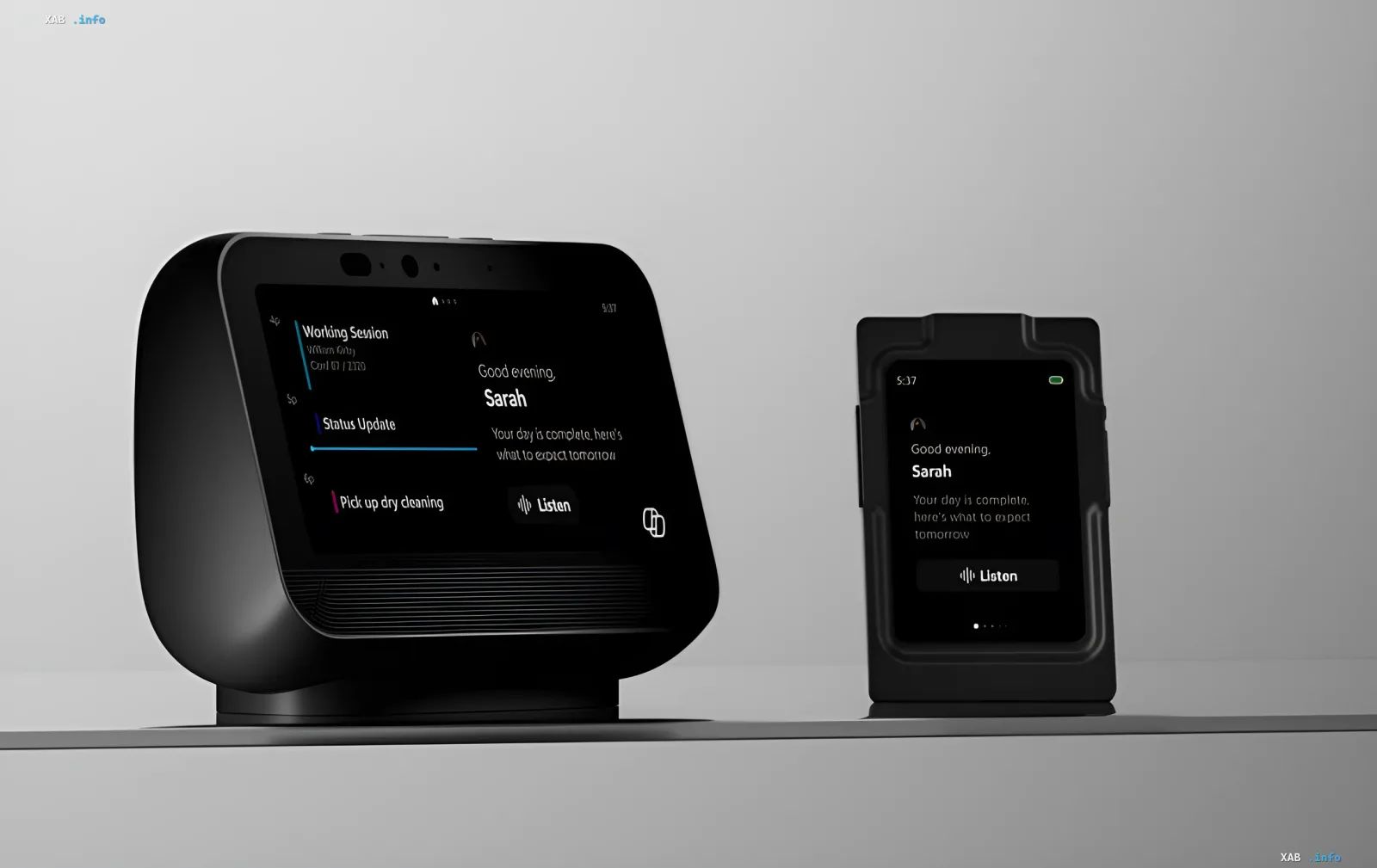
At the massive Build 2026 conference, Microsoft took a step that could revolutionize the concept of personal electronics. The company officially announced the Project Solara platform, declaring a paradigm shift: from traditional applications to autonomous AI agents that take over task execution on behalf of the user.
Microsoft has concluded that the familiar grid of icons on smartphone screens is becoming archaic and cumbersome in the era of active artificial intelligence. According to developers, devices of the future should be lightweight, specialized, and fully optimized for interaction with neural networks.
Flagship hardware in a badge body
Visually, the new device resembles a simple plastic access card, which office workers or medical staff are used to wearing around their necks. However, behind the modest design lies powerful internals capable of competing with top smartphones of the next generation, such as the iPhone 17 Pro or Galaxy S26 Ultra.
Key features of the gadget include:
- Screen and controls: A compact touch display for quick communication with AI agents and a side fingerprint scanner for biometric security.
- Cameras and sensors: The top camera allows the AI to 'see' the user's environment, analyzing objects and documents, and there is also a side camera.
- Audio and connectivity: Far-field microphone system with a high signal-to-noise ratio for accurate speech recognition, speakers, support for Wi-Fi, Bluetooth, GNSS, and 5G.
- Processor: A specialized Qualcomm mobile chip developed specifically for wearable devices.
In addition to the wearable badge, developers demonstrated a stationary smart display for the desktop. It automatically synchronizes with the PC and provides access to cloud services.
Why Android, not Windows?
One of the most surprising decisions was the choice of operating system. At the heart of Project Solara lies the Microsoft Device Ecosystem Platform, created based on open-source Android code, not Windows. This is a pragmatic step: Android consumes less energy, has better compatibility with thousands of sensors, and allows the device to work significantly longer on a single charge.
The main technological innovation is the on-demand interface. The AI generates the graphical shell in real-time for the user's specific task. This relieves developers of the need to rewrite program code for different screen formats.
Race with OpenAI and launch plans
Microsoft does not plan to mass-produce devices under its own brand. Project Solara is a set of reference samples and standards that the company will pass on to other hardware manufacturers. The rush to release is dictated by competitive struggle: rumors are circulating in the market about OpenAI developing its own AI phone with a launch in early 2027 based on the MediaTek Dimensity 9600 processor. Microsoft aims to outpace its competitor and capture the new market.
Currently, Project Solara is undergoing internal testing among hundreds of Microsoft employees. In the near future, pilot trials will start in major networks specializing in healthcare, finance, logistics, and retail.


