Microsoft has announced its intention to remove the Telnet client from Windows, a network utility that has been present in the operating system since its inception in 1995. The corresponding entry appeared in the updated official list of deprecated components. The company has not specified exact timelines for the removal: telnet.exe will be excluded in a future OS release, though the specific version and date are not fixed. Formally, the tool will continue to work until its actual removal, but the "deprecated" status means Microsoft no longer plans to actively develop it.
History: From Text Games to Network Equipment
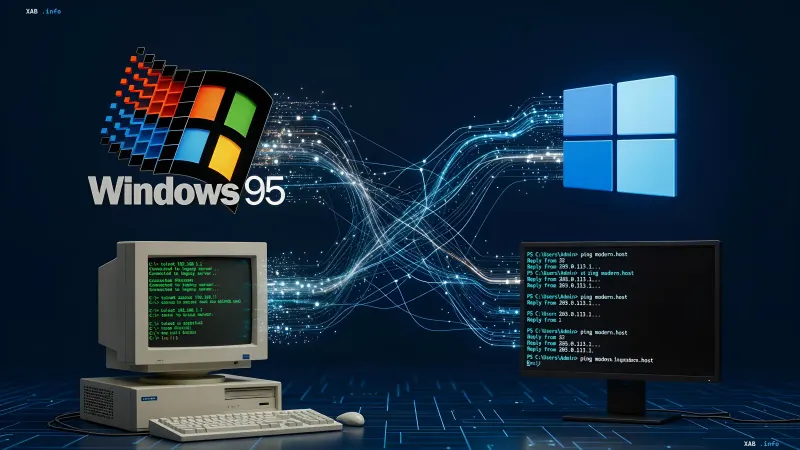
Telnet arrived in Windows simultaneously with the release of Windows 95 and throughout the 1990s and early 2000s was one of the primary means for remote connection to other computers. Using it, users logged into text-based online games, browsed electronic bulletin boards, and system administrators configured network equipment — routers and switches that lacked a graphical interface. Essentially, Telnet was a "window" into an era when the network was still perceived primarily as an environment of text terminals.
Why the Protocol is Outdated: A Security Issue
The key reason why Telnet is losing relevance is insufficient security. The protocol transmits data, including passwords and service information, in plain text without encryption. This makes it vulnerable to interception at any point in the network. It has long been replaced by more secure solutions, primarily the SSH (Secure Shell) protocol, which provides channel encryption. As a result, Telnet's practical role has narrowed: today the client is mainly used for diagnosing network connections and checking device availability by port, rather than for full-fledged remote access.
Disabled by Default and the Path to Removal
It is worth noting that Microsoft actually disabled Telnet by default back in Windows Vista — meaning a user who did not enable the component manually could not use it. The new deprecated status logically continues this trend: the company is signaling that the era of the tool is over. Until its final exclusion from Windows, the utility will continue to function, but those who use it for diagnostics will eventually have to switch to alternative means — including the built-in capabilities of PowerShell, which cover tasks of checking network connections and host availability.
What This Means for Users and Administrators
For the average user, the news is practically insignificant: the client has long not been used in daily scenarios. For system administrators and network specialists who still keep Telnet in their arsenal for debugging, this is a signal to plan migration to modern tools. Given that exact removal deadlines have not been announced, specialists still have time for the transition, but the very fact that the component has been included in the deprecated list is final confirmation that Telnet's 31-year history in Windows is coming to an end.