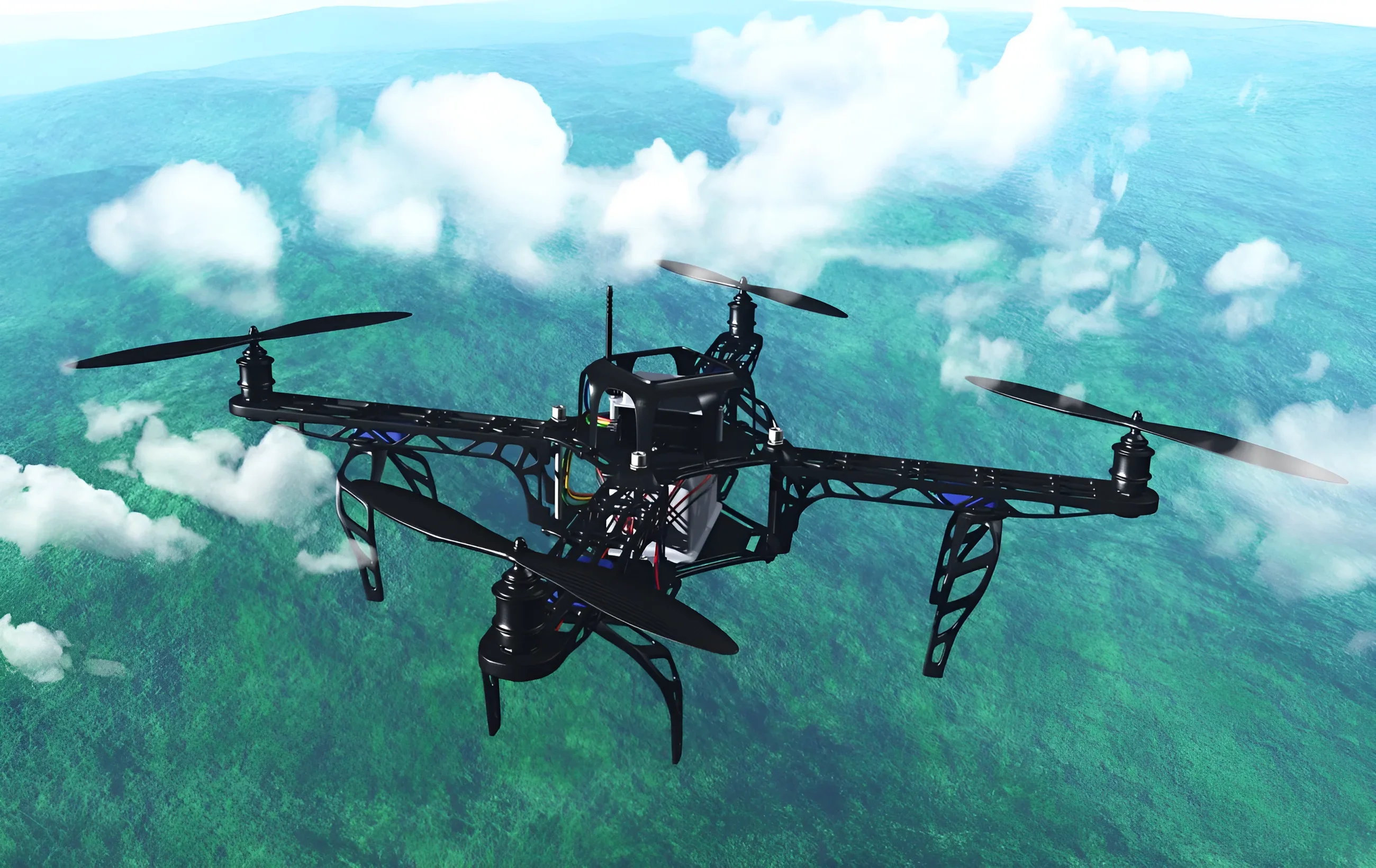
Imagine a drone that never gets tired. An aircraft capable of hovering in the sky for days without returning to base for recharging. What was once the plot of a science fiction novel is becoming a reality today thanks to a breakthrough in wireless power transmission. Chinese engineers from Xidian University, working in tandem with the military, have demonstrated a technology capable of radically changing the architecture of future air operations.
Microwave Focus
The essence of the development is simple in theory but complex in execution: a ground station generates a powerful stream of microwave radiation and directs it precisely at the antenna of a flying drone. This allows energy to be transmitted "over the air," replacing heavy batteries with signal receivers. The main challenge was not generating energy, but accurately aiming the beam at a moving target. The integration of advanced flight controllers and GPS allowed the systems to synchronize, ensuring uninterrupted power supply to a fixed-wing drone for three hours.
The Price of Progress
However, the technology is still far from perfect. The main problem remains the low efficiency (efficiency coefficient). At the moment, the drone manages to absorb only 3-5% of the total radiated energy. The rest is dissipated in the atmosphere. Moreover, the weather plays a cruel joke: strong winds and humidity can disrupt aiming accuracy, interrupting power supply. Nevertheless, even such indicators open the door to the world of next-generation autonomous systems.
Technology Race: The US Response
China is not alone in its ambitions. The US Defense Advanced Research Projects Agency (DARPA) is conducting a parallel race under the POWER program. The American concept is based on creating a large-scale "wireless energy web" using powerful ground lasers and a chain of repeaters.
Pentagon engineers have already set an impressive record: transmitting 800 watts of power over a distance of more than 8 kilometers. Despite the same problems with energy losses, American specialists are confident: getting rid of fuel limitations will allow the creation of unmanned vehicles of a fundamentally new configuration, capable of making global flights.
The Reality of Modern Conflicts
The relevance of these developments is confirmed by events on the battlefields in Eurasia and the Middle East. During the Russo-Ukrainian war, Ukrainian drones regularly strike targets at a distance of more than 1600 km from the border. The ability to keep a reconnaissance or strike aircraft in the air constantly is becoming a key factor in strategic superiority.
Alternative Paths to Autonomy
In addition to lasers and microwaves, military departments are testing other solutions to extend the life of drones:
- Drone Power Banks: A US Army patent describes the concept of large UAVs that can charge smaller devices directly in flight.
- Solar Energy: US Navy projects have already demonstrated the possibility of multi-day autonomous flights using solar panels.
- Container Bases: DARPA has commissioned the development of autonomous sea and land containers for the automatic launch, capture, and charging of drone swarms.
The arms race has moved into the field of energy. The country that first solves the problem of efficient wireless energy transmission will gain a decisive advantage in reconnaissance and organizing continuous air attacks.


