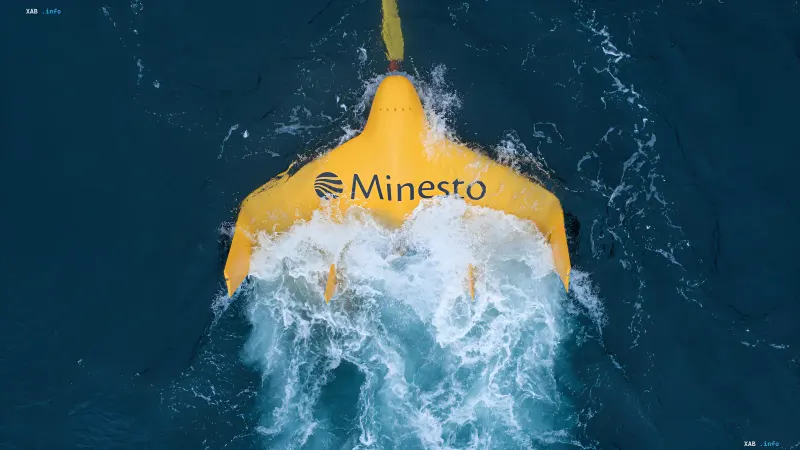
Swedish company Minesto has introduced an upgraded version of its T-Dragon underwater tidal installation, known in the industry as the "energy kite." The key change concerns the operating depth: the updated system is designed for locations with a depth of approximately 25–30 meters and is capable of withstanding water currents of up to 5 m/s (18 km/h). According to the developers, this should make tidal energy profitable in areas previously considered too complex and expensive for traditional solutions to develop.
A Kite That Dives Deeper
Prior to the modernization, the Dragon technology was geared towards deeper-water sites. Reducing the minimum operating depth to 25 meters expands the range of suitable locations: the installation can now be deployed in relatively shallow tidal areas where cable laying and infrastructure maintenance are cheaper. At the same time, according to Minesto, the upgrade retains the system's relatively low cost and ease of installation—two factors the company considers crucial for commercial deployment.
How the "Energy Kite" Works
The Dragon technology uses underwater vehicles resembling kites. The device moves along a predetermined trajectory driven by the current, and the water passing through a turbine mounted on it activates it. This approach extracts energy from the flow without the need to anchor a large turbine to the seabed. According to the company, the patented Dragon system is the only proven marine energy installation capable of cost-effectively operating even in relatively weak currents.
650 Gigawatts of Potential
Minesto expects that the upgrade will unlock the entire previously identified tidal energy potential of around 650 GW and open access to additional sites. The developers consider locations where research has already been conducted, permits obtained, and infrastructure partially built to be especially promising, but where traditional tidal power plants proved too expensive to implement. Company CEO Martin Edlund noted that the new version expands application opportunities and allows offering it to project developers at all existing tidal sites worldwide, including areas where traditional underwater turbine projects were prepared for years without becoming economically viable.
Competition Shrinks
The modernization comes against the background of a shrinking number of companies developing tidal energy systems. According to Minesto's estimates, in recent years the number of sufficiently mature technology providers in the industry has dropped from about 20 to fewer than five. This is especially noticeable among manufacturers of traditional seabed-anchored turbines. The Swedish company expects to capitalize on the situation and offer an alternative to existing solutions, relying on lower costs and deployment flexibility.
What Is Still Missing
At the same time, Minesto has not yet disclosed the rated capacity of the updated T-Dragon version or announced a timeline for its commercial launch. Founded in 2007, the company specializes in marine current energy harvesting technologies. The lack of specific capacity figures and deadlines means that practical validation of the claimed performance at real sites is still ahead, and for now, the upgrade remains an important but unfinished step towards the commercialization of tidal energy.