

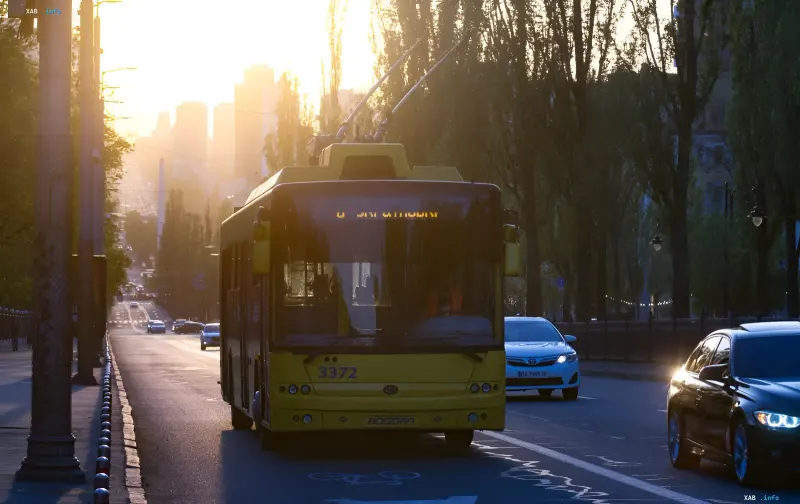
Every driver knows this scenario: a minibus appears on the road, the driver turns on the indicator, and the flow of traffic immediately brakes. But is this action always correct according to the law? It turns out that many drivers forget about the nuances of the Traffic Rules (Road Code) that regulate this maneuver.
According to clarifications published by RBK-Ukraine, the obligation to yield to public transport is not absolute and unconditional. It comes into force only when a number of conditions are met.
When is yielding mandatory?
The key point is Section 17.4 of the Traffic Rules. It clearly states that within populated areas, drivers must reduce speed or stop if approaching a bus, minibus, or trolleybus that is starting to move from a designated stop.
It is important to note a specific condition: the stop must be located in a pull-out "pocket". Only in this case is priority given to public transport for a safe exit onto the main lane.
Reduce speed or stop?
Many drivers mistakenly believe that a minibus turning on its signal is a cue for an immediate emergency stop. However, the rules require a different algorithm of action:
- First, the driver of a passenger car must reduce speed.
- If a gradual deceleration is sufficient for the bus or trolleybus to safely exit the stop, that is quite enough.
- A complete stop is required only if it is impossible to allow the minibus to start moving without it.
Responsibility of the minibus driver
The Traffic Rules place responsibility on both parties. The priority of public transport does not give the bus driver the right to reckless maneuvers. After turning on the indicator, the public transport driver must ensure that the exit is safe and take measures to prevent a traffic accident.
Thus, the law requires mutual respect and attentiveness: drivers of other vehicles must create conditions for the exit, while the minibus driver must exit without creating danger for others.
Previously, experts have already clarified that a yellow traffic light signal does not always mean a mandatory stop: if a safe stop is impossible without emergency braking, movement can continue. Similar safety logic is also seen in the rules of interaction with public transport.


