The Miss Universe 2026 pageant once again turned the stage into a showcase of cultural diversity: contestants from dozens of countries presented national costumes where nature, mythology, and modern technology blended into a single whole. The editorial team at Wave RBC.UA collected 11 of the most spectacular looks and analyzed their symbolism, materials, and design solutions. Among them are an earth goddess from a Burmese legend, a silver seagull representing a Chilean music festival, and a Mexican outfit featuring a unfolding fan of pink flamingo feathers behind the contestant's back.
Nature as the Main Source of Inspiration
Jennifer Barreto's green and pink costume from Puerto Rico was perhaps the most "alive" on stage. The look is inspired by the sensitive plant, known on the island as morivivi: the plant folds its leaves when touched and unfolds them after some time. Designer Joshuan Aponte transferred this mechanic to the outfit — large decorative leaves folded and unfolded around the contestant, creating an effect of motion. Shiny green elements, pink flowers, and a headdress framing the face with leaves complemented the composition. In the same vein, but in rich burgundy tones, Marcella Kozinski from Brazil presented a costume dedicated to the guarani plant — one of the symbols of the country's natural wealth. According to the Brazilian broadcaster Record, the outfit was adorned with 40,000 crystals and LED lighting; the fruits for the headdress were 3D-printed, and the leaves were made from recycled plastic bottles.
Mythology and Cultural Heritage
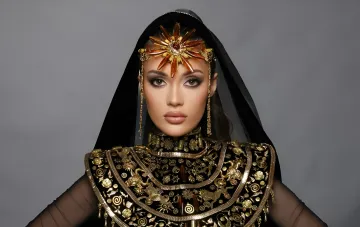
May Grace Perry from Myanmar drew upon the image of Wathundari, the earth goddess in Burmese Buddhist tradition. According to legend, the goddess squeezed water from her long dark hair, washing away the forces opposing Buddha. The contestant recreated the plot: she held a long lock of hair in her hands, while the costume itself, in dark shades with rich gold decor, sculptural shoulders, and a high headdress, created a monumental silhouette. The representative of the Philippines, Bea Millan-Windorski, in turn, presented the heritage of the Cordilleras: designer Anthony Ramirez combined traditional fabrics, multi-layered jewelry, and patterns inspired by Kalinga tattoos. The central element was a tall composition of clay pots on her head, referencing the Banga Salidsid dance and women carrying water along mountain paths.
National Symbols and Codes
Jessie Kalambayi from the Democratic Republic of the Congo appeared in a colorful blue costume with red and golden accents; behind her rose a structure with flag-like banners, stars, and sharp decorative tips. Maria Alejandra Lopez Perez from Colombia chose the image of an emerald queen, a reference to the country's famous precious stones: a green costume with faceted elements resembling crystals and golden lines, with a voluminous train trailing behind. Clara Vegas Goetz from Venezuela combined a beauty crown with a baseball theme: she took the stage with a bat, and the outfit in the colors of the national flag — yellow, blue, and red — was supplemented by a long cape with stars and massive decorative shoulders, giving the costume an almost superhero-like appearance.
Music, Birds, and Recycled Plastic
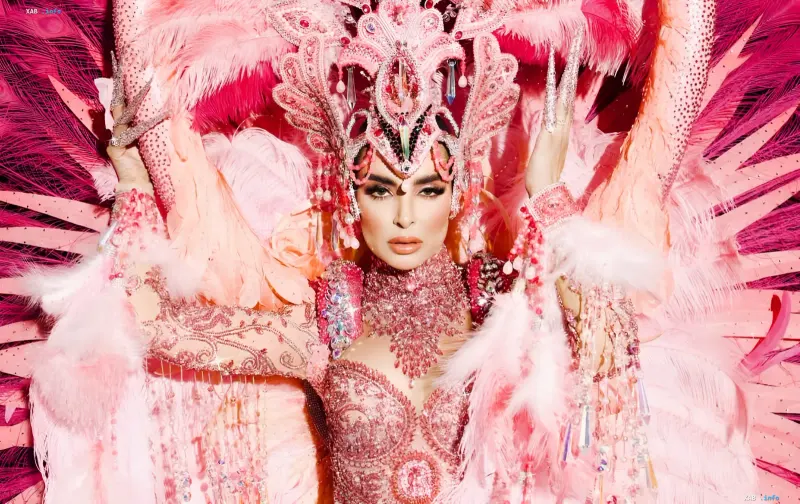
Dominga Lopez from Chile turned into a silver seagull, a reference to the Gaviota, the award of the Vina del Mar music festival. A metallic outfit with large wings that the contestant raised with spread arms, mirrored surfaces, and long boots enhanced the resemblance to the shiny statuette. Maria Guadalupe Vargas Naranjo from Mexico presented one of the most voluminous looks of the selection: a pink costume with huge flamingo figures, a fan of bright feathers behind her back, and long bird necks over her shoulders. The combination of fuchsia and pastel shades emphasized the layering of the outfit. Kaziya Liz Majo dedicated her look to her home state of Kerala: designer Sidhant from House of Sidhant combined fabrics from different regions of India into a light long base with red, yellow, and blue tiers and a large decorative composition behind her back.
Technology and Sustainability in Fashion
The technological component of several outfits deserves special attention. The Brazilian costume with 40,000 crystals and LED lighting demonstrated how digital manufacturing — 3D printing — is integrated into pageant modeling. The use of recycled plastic bottles for the leaves became a practical example of sustainable fashion on the international stage. In total, the 11 looks, from the touch-sensitive mimosa to the seagull with mirrored wings, confirmed: the national costume at Miss Universe has long ceased to be just a decorative element and has become a full-fledged artistic statement, where each detail carries the cultural code of its country.