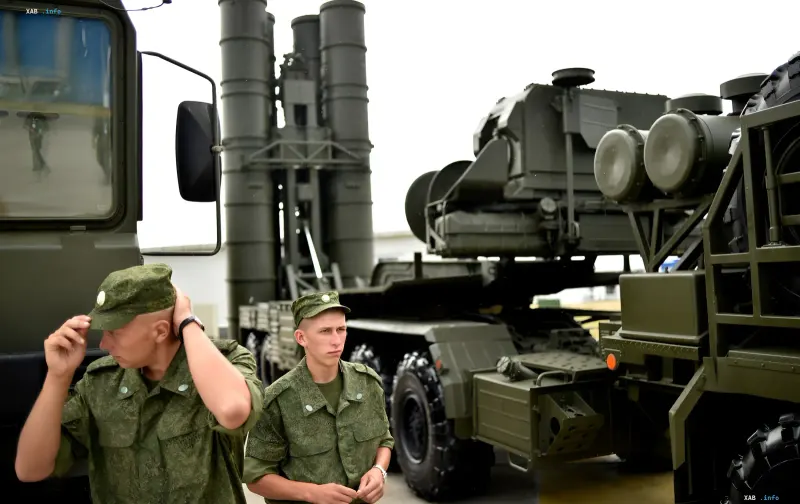
The Russian Pacific Fleet announced on Thursday the conduct of rare missile exercises involving naval vessels and a land-based launch system in the area of the Southern Kuril Islands — territory also claimed by Japan. According to the fleet, launches were carried out from a nuclear submarine, a missile cruiser, and the Bastion coastal defense system. It is reported that the missiles were fired at targets at a distance of more than 300 km and hit them. However, the ministry did not disclose the exact date of the firing or the specific coordinates of the range, limiting itself to the general formulation "in the area of the Southern Kuril Islands".
Tokyo's Reaction: Foreign Ministry Protest
In Japan, the exercises were seen as an escalation. The head of the Japanese Ministry of Foreign Affairs, Toshimitsu Motegi, told journalists that "the buildup of Russian military power on the four Northern Islands contradicts Japan's position and is unacceptable". Recall that the Southern Kuril Islands are under Russian control after the USSR seized them from Japan in the final days of World War II. According to available data, Bastion coastal defense batteries on Iturup Island (Etorofu in Japan) were deployed back in 2016, making new launches from coastal positions a logical continuation of the militarization of the region.
Context: Putin's Visit and Diplomatic Deadlock
Missile tests and the recent visit of Russian President Vladimir Putin to Iturup Island — his first to this territory, which provoked a protest from Tokyo — took place against a backdrop of cooling relations. Japan has joined Western countries in supporting Ukraine, including sanctions against Moscow and the delivery of non-lethal weapons to Kyiv — body armor and vehicles. During his visit to the Far East, Putin stated that Japan had "without provocation" changed its attitude towards Russia, criticized the sanctions, and pointed out that Russia is named a serious threat in Japanese defense documents. At the same time, he emphasized that ownership of the islands is "enshrined in international documents", but Moscow is ready to find a solution through a peace treaty.
Contradictory Data
There are several inconsistencies here that are important to note. First, the Pacific Fleet did not specify either the exact date of the exercises or the exact place of the launches, although the fact of the firing and hitting targets at a distance of more than 300 km is confirmed. Second, open sources are circulating with the assumption that the current Prime Minister of Japan, Sanae Takaichi, unlike her predecessors, has not yet held talks with Ukrainian President Volodymyr Zelenskyy and may try to resume dialogue on the disputed islands with Russia; however, this is only an analytical guess, not confirmed by official statements from Tokyo. Finally, the previous attempt by former Prime Minister Shinzo Abe to agree on the return of two islands was unsuccessful, and the prospects for resuming negotiations, according to estimates, are practically non-existent.
Significance for the Region
The dispute over the islands has hindered Moscow and Tokyo from signing a formal peace treaty following World War II for decades. New missile exercises near the disputed territory only increase tensions and demonstrate that Russia's military presence on the Kuril Islands continues to grow. For Japan, this is an additional argument in favor of strengthening its own defense and coordinating with allies; for Russia — a demonstration of control over the Pacific waters. In conditions where the diplomatic track is effectively frozen, military actions become the main indicator of the state of relations between the two countries.