
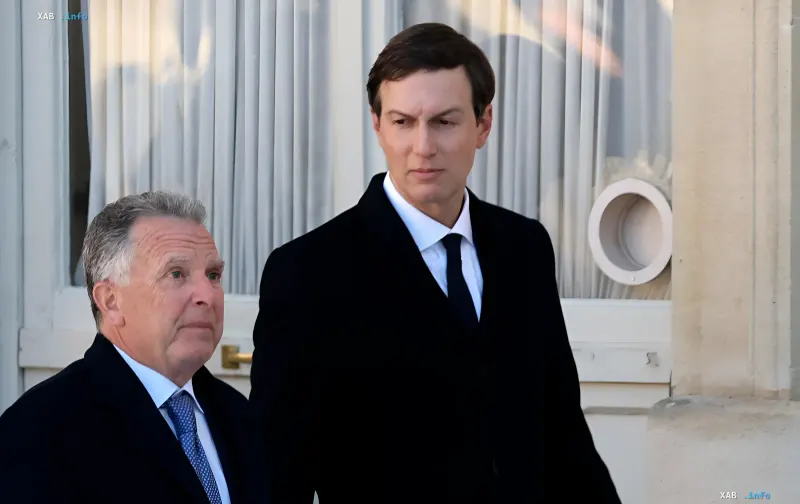
Diplomatic rhythms in relations between Moscow and Washington are undergoing significant changes. Russia has officially expressed dissatisfaction with the current format of interaction, stating that it is tired of periodic visits by special envoys of the US President. In particular, the Kremlin pointed out the inefficiency of contacts with figures such as Steve Witkoff and Jared Kushner. According to The New York Times, Moscow is insisting on a transition to a fundamentally new model of negotiations on a peaceful settlement.
New demands from Moscow: from special envoys to working groups
Instead of episodic meetings with administration representatives, Russia proposes to build a "stable diplomatic process." Key elements of the new model should be the creation of permanent working groups and the holding of regular high-level meetings. In addition, Moscow has again raised the issue of returning the US ambassador to Russia, viewing this as a necessary step for normalizing dialogue.
This position reflects the Kremlin's desire to move away from improvisation to systematic work. However, experts note that the implementation of these plans may encounter internal features of American politics. Richard Fontaine, Executive Director of the Center for a New American Security, emphasizes that foreign policy is a complex and long-term process that requires consistency, not loud statements.
The problem of consistency in Trump's policy
Fontaine pointed out that Donald Trump is not the first president seeking "quick and simple solutions" to global problems. However, it is consistent management and seeing things through to the end that often make the decisive difference. The expert noted that consistency has never been a strong suit of the current American leader. In the past, Trump often demonstrated a desire for flashy agreement-signing ceremonies and gathering evidence of his "breakthroughs" for the Nobel Peace Prize.
It is important to note that the US President himself admitted that he underestimated the complexity of the Russo-Ukrainian war and, perhaps, his persuasive abilities. Trump previously stated that there were cases where he made deals with Vladimir Putin, but Volodymyr Zelenskyy refused the deal, which shocked him. At the same time, he noted that now "both want to make a deal".
Escalation risks and strategic goals
The situation remains tense. Some high-ranking Kremlin officials admit that the war against Ukraine has reached a dead end, and there is no safe exit for the regime yet. At the same time, as reported by RBK-Ukraine, there is a threat of expanding the conflict. Estonian politician Kaja Kallas warned of the risk of escalation by Russia beyond Ukraine, noting that Moscow retains strategic goals to change the security architecture in Europe.
If hostilities resume, Trump, according to experts, is unlikely to dwell on long-term consequences. Control over political events in Iran, Russia, and Ukraine, according to Trump's aides, is something the US does worst. Thus, the question of transitioning to a stable diplomatic process becomes not just a formality, but a matter of survival for the current international system.


