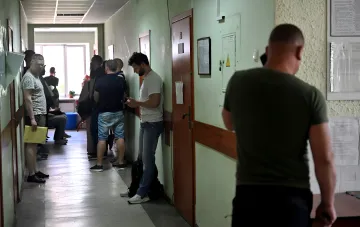
Moscow Military Commissar Maxim Loktev has announced that capital draftees now have an alternative path: instead of mandatory military service, they can sign a one-year contract with the Ministry of Defense and join unmanned aerial system units. According to Loktev, this service counts toward the compulsory service requirement, with recruitment focused on drone operators, engineers, and technicians. Preference is given to candidates with backgrounds in IT, electronics, radio engineering, and model aviation. The initiative was presented as an "elite" track where young men would allegedly be stationed dozens of kilometers from the front lines.
Formally a Year, Actually Until the End of Mobilization
Lawyers familiar with military contract mechanisms point to a significant gap between the marketing pitch and the legal reality of the document. A contract with unmanned system units is a standard military contract that remains in effect until the end of mobilization. When the formal one-year term expires, the command is under no obligation to release the serviceman. Early discharge requires "exceptional circumstances," the list of which remains vague and subject to command discretion. Experts, including the media outlet Verstka, characterize the clause about the ability to resign after a year as "bait" and a "marketing ploy" designed to entice young people into signing.
Promises of "Not a Stormtrooper" vs. Practice
The Ministry of Defense and several officials have repeatedly stated that a drone unit contract does not allow for a person to be sent to the front as an assault infantryman (stormtrooper). However, lawyers refute these claims: under the law, the command has the authority to transfer a serviceman to any unit, including assault units. In practice, as reported by media, contractors have indeed been sent to assault units participating in the invasion of Ukraine, despite initially joining drone units.
Fatalities: From Operator to Assault Company
The BBC previously reported on three Russian students who signed contracts as drone operators and died in the war within a few months. One of them, 18-year-old Vladislav Gorbunov, was initially assigned to an assault company before being transferred to a drone unit. He died on April 6, just over four months after signing his contract. 23-year-old student Valery Averin from Buryatia completed drone operator training and died near Luhansk less than two weeks after graduation. These cases demonstrate that the promised "safe" service profile is no guarantee.
Context: Why Now?
The proposal of a one-year drone unit contract fits into the general context of personnel shortages facing the Russian army amid ongoing mobilization. Unmanned system units, formally positioned as a high-tech and "elite" career path, serve as a recruitment tool for young people who may view drone service as a less dangerous alternative to infantry. However, the legal structure of the contract provides no real guarantees regarding duration or location of service, making the advertising claims and the actual conditions fundamentally different.