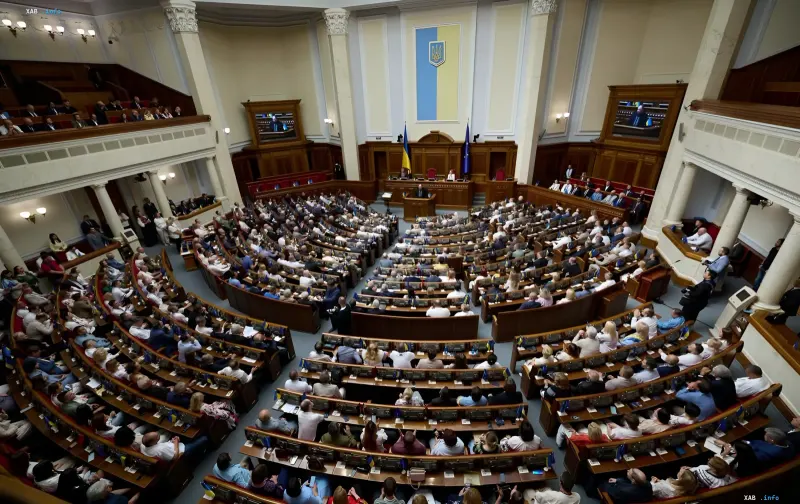
Members of Parliament have sent an appeal to Prime Minister Serhiy Koretsky, calling for the retention of 64% of personal income tax (PIT) in the budgets of territorial communities for 2027 and against the withdrawal of reverse subsidy funds into the state budget. This was reported by RBC-Ukraine with reference to the text of the parliamentary appeal to the Cabinet of Ministers. The authors of the initiative insist that these revenues are a key tool for the financial stability of local self-government and ensure the fulfillment of powers delegated to the communities.
Parliamentary basis: points 2.17 and 2.18 of budget conclusions
The deputies' proposals are formally enshrined in points 2.17 and 2.18 of the budget conclusions to the draft State Budget of Ukraine for 2027 (registration number 16000). The Verkhovna Rada approved these conclusions on October 28 and instructed the government to work through the relevant issues while preparing the document for the second reading. Thus, the appeal to the Cabinet is a reminder of a previously adopted parliamentary decision and a request to consider its position during the revision of the bill.
Why communities need 64% of PIT
The appeal emphasizes that 64% of PIT is one of the sources of funding for the additional powers delegated to territorial communities following the start of the full-scale invasion. According to the authors, these revenues allow for the operation of municipal enterprises, primarily in the fields of heat and water supply. A separate challenge cited is the state's arrears in compensation for the difference in tariffs, which, according to the text of the appeal, amounts to 85 billion hryvnias.
Reverse subsidy: risk of withdrawing 19.2 billion hryvnias
Special attention in the document is paid to the reverse subsidy. According to the draft state budget for 2027 in the first reading, it was planned to withdraw 19.2 billion hryvnias from the budgets of 218 territorial communities, including 152 rural and settlement communities. Deputies point out that after the mass destruction of large tax-paying facilities and the reduction in tax revenues, the withdrawal of reverse funds will create an additional deficit in local budgets and may force communities to cut spending on priority needs, maintenance of municipal infrastructure, and the provision of basic services. According to their assessment, small communities and those in frontline regions will be the most vulnerable, as they simultaneously face declining revenues, infrastructure destruction, population outflow, and the need to finance civil protection and the aftermath of attacks.
Support from the Association of Ukrainian Cities
The deputy appeal was supported by the Association of Ukrainian Cities, which also urged the government to retain 64% of PIT and reverse subsidy funds in community budgets. The AUC previously noted that the current mechanism for calculating the reverse subsidy does not take into account the destruction of enterprises that previously provided significant tax revenues: since the withdrawal for 2027 will be calculated based on the indicators of the previous year, communities risk losing funds that they are no longer actually earning. According to the association, this creates a risk of "artificial bankruptcy" of communities and threatens their ability to support the local economy. Deputies, in turn, emphasize that annual changes in the rules for the distribution of tax revenues and the withdrawal of funds create uncertainty for local self-government and complicate budget planning.