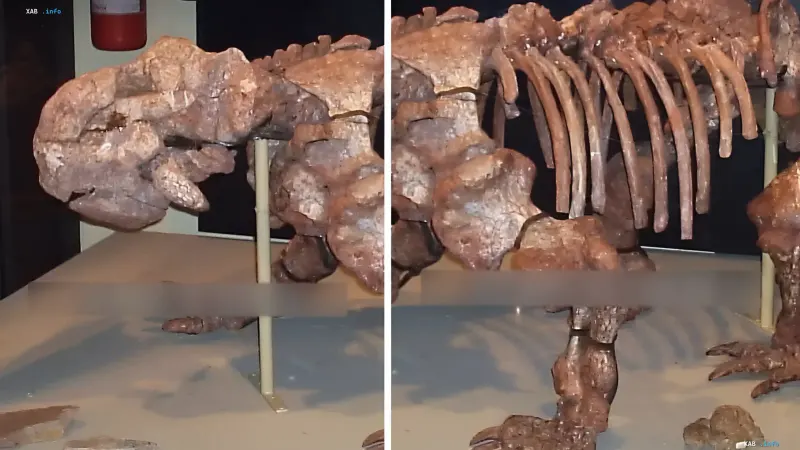
Paleontologists have made an astonishing discovery, describing a new species of ancient creature that inhabited our planet about 240 million years ago. The new species has been named Dinodontosaurus isiyavamanda and is a herbivorous animal belonging to the group of synapsids. It is important to note that synapsids are not dinosaurs, but distant relatives of modern mammals, making this find particularly valuable for studying the phylogenetic tree.
History of Discovery and Museum Collections
The most intriguing aspect of this scientific breakthrough is the fact that some of the fossils were excavated back in 1963 during early expeditions. For more than sixty years, these unique bones gathered dust in museum archives, waiting for their time and the advent of modern analytical methods. Only recently have researchers conducted a detailed re-examination of the collections, comparing old samples with new field finds in Tanzania.
Evolutionary Significance and Zoogeography
Until recently, it was believed that such organisms lived exclusively on the territory of the ancient supercontinent Gondwana in its South American part. The discovery of Dinodontosaurus isiyavamanda remains in Tanzania fundamentally changes scientists' understanding of the migration and habitat of these herbivores. This proves that ancient synapsids were much more widely distributed across the African continent than previously assumed.
Controversial Data
During the initial analysis of the materials, discussions arose regarding the exact classification within the dinodontosaurids and the timing of their migration between South America and Africa. Some researchers point to morphological differences between the Tanzanian and South American samples, suggesting parallel evolution in isolated ecosystems. Other experts insist on a single continuous habitat, arguing this based on similarities in jaw structure and teeth.
Prospects for Further Research
The discovery underscores the colossal potential of revising old museum collections using computed tomography and isotope analysis technologies. Scientists hope that further excavations in East Africa will help close gaps in the paleontological record of the period preceding the age of dinosaur dominance.