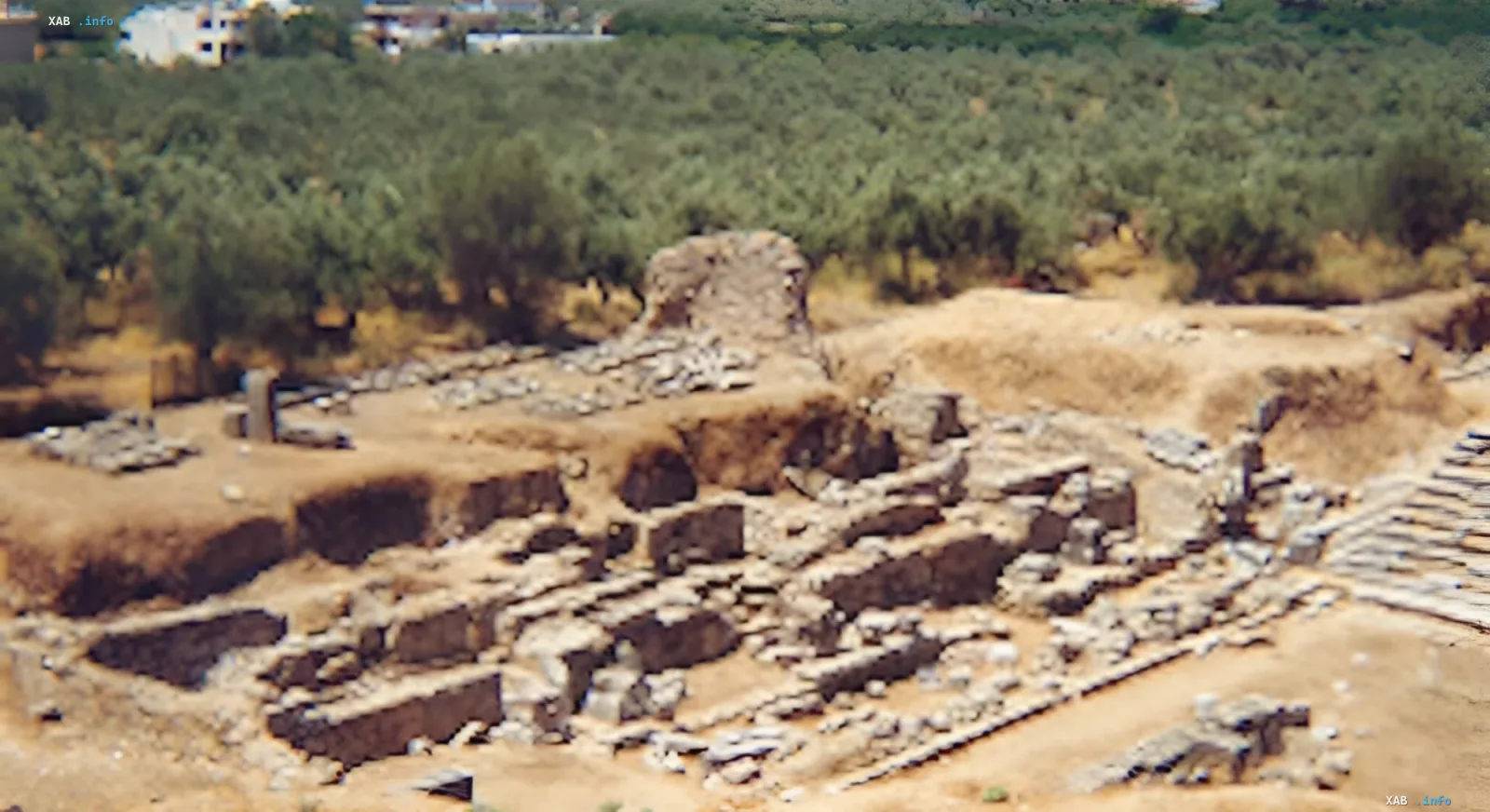
In the public consciousness, Sparta remains forever a warrior state, a symbol of the "Spartan spirit" and determination. For a long time, historical science adhered to the version that this powerful state was artificially created by a group of conquerors who forcibly imposed their will on the Peloponnesian land. However, fresh scientific data forces a re-evaluation of this established dogma.
As reported by Foxnews, historian Hans Beck has presented a work offering a radically new perspective on the origins of Spartan civilization. Instead of a scenario of sudden conquest and state-building "from scratch," science leans towards the version of evolutionary development based on an ancient local culture.
From Palace Frescoes to Military Might
Traditionally, it is believed that the Spartan state arose in the 9th century BC and dominated the Peloponnese for more than three hundred years, until 371 BC. The classical model describes it as a society formed exclusively as a result of military campaigns. But archaeology paints a much more complex and interesting picture.
The key evidence for the new hypothesis was the Agios Vasilios archaeological complex. Excavations here revealed traces of life that do not fit the concept of "empty land" conquered by outsiders. Scientists discovered:
- Remains of an ancient palace;
- Frescoes testifying to a developed artistic culture;
- Bronze weapons;
- Administrative tablets with Linear B script — the oldest form of Greek writing.
These findings indicate that on the territory of future Sparta, a complex administrative and cultural system existed long before the appearance of the famous military order.
The Sanctuary as Proof of Continuity
Additional weight to Hans Beck's theory is given by the history of the Amyclae sanctuary. This place continued to function even after the decline of the palace complex. It became an important center for both Spartans and other local communities.
The continuity of ritual activity in Amyclae is a powerful argument against the theory of total conquest. If Sparta had been created by conquerors who completely destroyed the past, ancient traditions would have been interrupted. However, rituals were preserved, confirming that Sparta formed on the foundation of older local traditions.
The researcher emphasizes: these data do not negate the military might of Sparta in subsequent centuries. The state indeed became a war machine, but its origins lie not in expansionist ambitions, but in deep cultural continuity.
Roman Bridge in the Aare River
While in Greece the ancient history is being re-evaluated, in Switzerland a discovery has been made that returns us to the era of the Roman Empire. As reported by UNIAN, Swiss archaeologists discovered in the Aare river, near the city of Solothurn, the remains of a Roman bridge that was considered lost.
Probably, this is the only pile structure of the Roman era that has survived to this day in such a form. The discovery was accidental: the find was made during preparations for the construction of a new modern bridge. Divers inspecting the riverbed discovered a row of wooden piles oriented along the current.
After a thorough analysis of materials, researchers dated the structure to the 4th century AD. The bridge connected a Roman fortified settlement with an important transport route linking Italy and the Rhine. This find not only confirms the presence of complex engineering infrastructure in the region but also sheds light on the logistics of the Roman Empire on its northern borders.


