
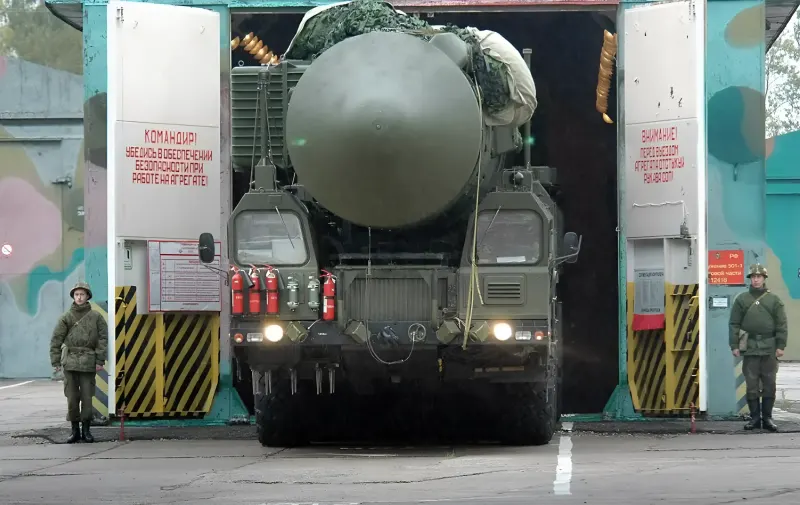
Russian propaganda tirelessly mythologizes the latest weapons systems, presenting them as absolute weapons capable of solving any task. The RS-26 'Rubezh' ballistic missile, dubbed 'Oreshnik' in Ukrainian media, has become the latest target of such disinformation. Kremlin sources claimed that the missile carries secret tungsten kinetic elements capable of penetrating the deepest underground bunkers, leaving almost no trace on the surface. However, reality turned out to be far less spectacular than the creators of these myths would have liked.
What the Craters Reveal
Experts and journalists who studied the aftermath of the attack on Bila Tserkva on the night of May 24 reached conclusions that completely refute claims of 'super-penetration'. The destruction caused by the MRBM blocks has nothing to do with theoretical models of kinetic weapons. On the contrary, the nature of the damage and the parameters of the craters in ordinary soil are identical to those previously recorded in Dnipro and Lviv during attacks by other types of munitions.
Upon impact with the ground, the missile blocks underwent colossal fragmentation and partial vaporization. This made it impossible to accurately identify their contents — whether they really contained tungsten rods or just mock-ups. But even without a detailed analysis of the warhead composition, the picture of destruction speaks for itself: there was no 'secret' technology involved.
The Mathematics of the Strike
Preliminary calculations of impact energy show that each 'Oreshnik' block possessed kinetic energy in the range of 220 to 400 megajoules. For comparison: such an impact in terms of TNT equivalent is comparable to a chemical explosion of 52 to 95 kg of explosives. This is powerful, but not unique.
The main difference between a kinetic strike and a high-explosive one lies in the nature of the destruction. When a high-explosive warhead detonates, primary and secondary shrapnel are formed, causing extensive damage over an area. A kinetic strike, even at high energy, leaves more localized damage without characteristic shrapnel fields. This is exactly what was observed in Bila Tserkva.
The Real Threat
The final conclusion of experts is unambiguous: 'Oreshnik' is not something fundamentally new in terms of combat effectiveness. Its striking power, considering the presence of 36 blocks in one missile, is conditionally equivalent to a strike by 36 'Shahed'-type kamikaze drones with enhanced warheads. This is a serious threat requiring attention from air defense systems, but far from the 'Doomsday Weapon' that Russian propaganda tries to portray.
The attack on Kyiv and Bila Tserkva, carried out on the night of May 24, was part of a large-scale combined operation by the enemy, involving drones and missiles of various basing types. However, an analysis of the consequences showed that behind loud names and claims of a 'breakthrough', there is often ordinary, albeit dangerous, combat equipment.


