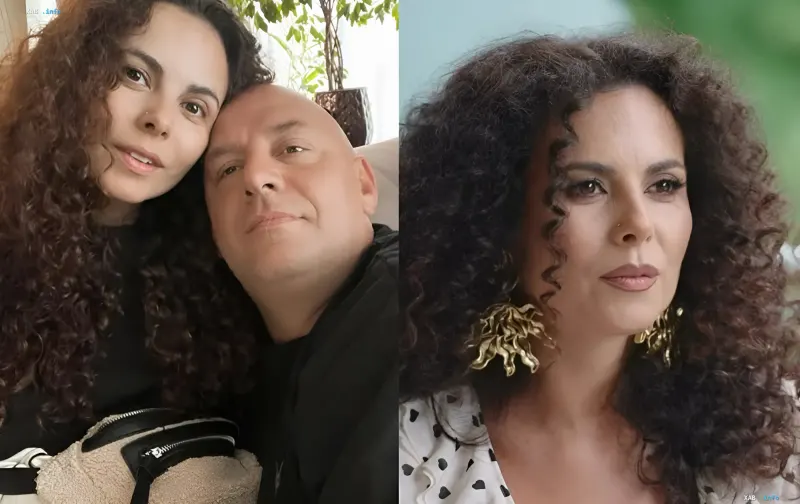
Nastya Kamenskikh, who rarely shares details of her personal life, made an exception in an interview with journalist Ekaterina Gordeeva and spoke candidly about a topic the public had been discussing for years without her input. The singer described her unsuccessful attempts to conceive, prolonged hormone treatment, and how public expectations made her feel "incomplete" without children. The conversation became one of the most personal in her career, touching on her medical experience, psychological state, and even rumors of a divorce from Potap.
From "Duty" to Acceptance
According to the artist, for a long time she viewed having a child as a kind of "duty" rather than a personal desire. She admitted that stereotypes heavily influenced her views: without children, a woman seemed unable to be considered whole. It was precisely this thought, in her words, that "drove" her to seek out specialists. Over time, her position changed: Kamenskikh stopped evaluating her life solely through the lens of the possibility of becoming a mother and stated that "you can still be whole without children."
Four IVF Cycles and Five Inseminations
The artist described her medical journey in detail: she underwent four in vitro fertilization procedures and five inseminations. In her words, this period was difficult not only physically but also psychologically. "It's a total bomb of hormones. I don't understand how I held up psychologically," she shared. In the end, the singer concluded that she cannot and does not want to have children, calling this experience "imposed." At the same time, she emphasized that she does not believe in the diagnosis of "infertility" as a final verdict: "Yes, I have my own nuances, but that's not what affects my inability to have children. I conclude that the Universe, God, doesn't want to give me this experience."
Contradictory Information
A separate part of the interview was devoted to rumors of a divorce from Potap, which had been actively discussed online for a long time. The speculation was fueled by the absence of joint public appearances and the artists' ambiguous statements. However, Kamenskikh explained that there had never been an official statement about a divorce: "We never said we were divorced, and we didn't write about it. The word 'divorce' wasn't there. We did it to amplify the effect. The effect of the duo's return." Thus, the public version of a breakup and the couple's own position diverge: in her words, the rumors were deliberately not refuted for the marketing effect of the duo's reunion, rather than reflecting the actual status of the relationship.
Potap's Support and a New Philosophy
During the conversation, Potap supported his wife, emphasizing that a woman remains a whole person regardless of whether she has children. Kamenskikh, in turn, defined her own understanding of fulfillment: in her view, a child "can be a career, can be songs." She does not view her experience as a verdict, but she is also not going to follow the traditional "marriage — children — family" script, accepting what is happening now. For her, fulfillment is creativity, music, and career, not just motherhood.
Thus, the interview became not just a revelation of a medical story but a public rethinking of her personal position: from an imposed desire to definitely become a mother — to accepting her own life in its current form. The singer effectively described a path in which public expectations gave way to personal choice, and the absence of children ceased to be a sign of incompleteness for her.