
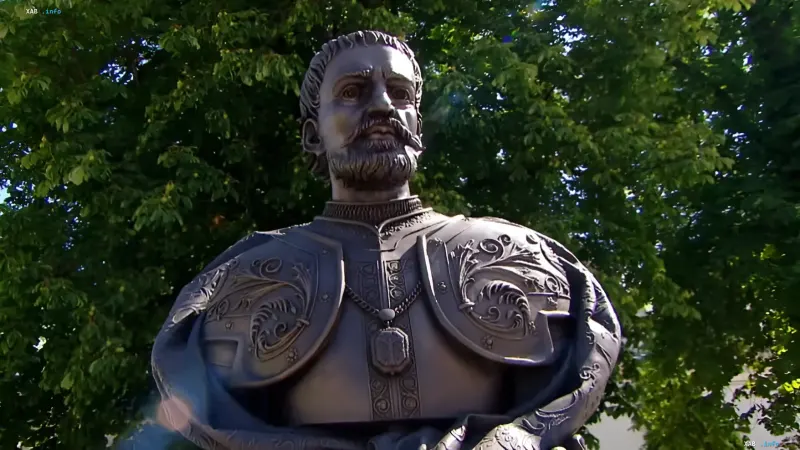
On June 28, 2026, events took place in Kyiv that could alter the appearance of the capital and the very concept of Ukraine's state memory. On the territory of the Kyiv-Pechersk Lavra National Reserve, President Volodymyr Zelenskyy announced a large-scale reform in the field of memorialization. At the center of attention is the creation of a National Pantheon and the return of the figure of Hetman Ivan Mazepa to the public space.
Legislative Foundation: What is the National Pantheon?
The main tool for implementing the new strategy became Draft Law No. 15360 "On the Ukrainian National Pantheon," submitted to the Verkhovna Rada. The document aims to create a regulatory framework for the memorialization of outstanding personalities. According to the text of the initiative, the Pantheon will become a publicly accessible state memorial complex in Kyiv, fully funded by the state budget. This implies not only the erection of monuments but also the maintenance of a round-the-clock honor guard.
The draft law establishes strict criteria for selecting personalities, which should eliminate arbitrariness in the choice of heroes. The registry may include:
- Leaders of Ukrainian state formations and Supreme Commanders-in-Chief;
- Figures who played a key role in gaining and defending independence;
- Nobel Prize laureates and recognized global figures in science and culture associated with Ukraine.
The design of the complex will be conducted through an open architectural competition, which should ensure the transparency of the process.
Mazepa Returns: From the Lavra to Shevchenko Boulevard
The symbolic start of the new policy was the unveiling of a bust of Hetman Ivan Mazepa at the walls of the Dormition Cathedral of the Kyiv-Pechersk Lavra. In his speech, Zelenskyy emphasized the Hetman's role as a patron whose funds allowed for the formation of the unique architectural ensemble of the Lavra in the style of Ukrainian Baroque. This is an attempt to shift the focus from political disputes surrounding Mazepa's figure to his contribution to culture and the preservation of sacred heritage.
However, the initiative is not limited to a single bust. The President announced the erection of a monumental monument to the Hetman in the center of Kyiv. The chosen site is Taras Shevchenko Boulevard, where a monument to Vladimir Lenin stood until December 2013. Experts view this decision as the final chord in the decommunization process: Soviet heritage is being replaced by figures associated with the era of Cossack statehood.
Legal Basis and Budgetary Expenditures
All initiatives rely on Article 11 of the Constitution of Ukraine, which obliges the state to ensure the consolidation of the nation's historical consciousness. This provides a legal basis for allocating budget funds for the creation of objects of national significance. Thus, the creation of the Pantheon and the installation of monuments to Mazepa are not just symbolic gestures, but a state program fixed at the legislative level.


