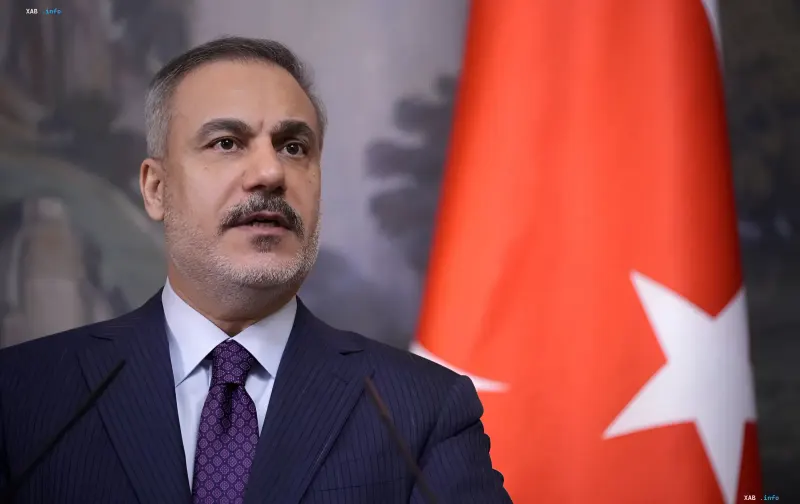
Turkey has officially announced that the North Atlantic Alliance is moving to a fundamentally new level of development. Turkish Foreign Minister Hakan Fidan, summarizing the summit in Ankara, called the meeting historic in terms of both the scale of the organization and the results achieved. According to him, allies managed to reach a consensus even against the backdrop of global instability and strategic disagreements.
Return to the Defensive Essence
The head of Turkey's foreign affairs ministry emphasized that the summit confirmed the relevance of NATO in modern realities. Fidan noted that the meeting was a kind of "re-opening" of the alliance's original role. In his view, the organization is returning to its roots: it is not an offensive structure but is based on defense, peacekeeping, and enhancing stability.
One of the key outcomes of the negotiations was the transformation of the principle of defense spending distribution from a political concept into real practice. The minister reminded that the US has for a long time been calling on European partners to take on a greater share of responsibility for their own security. Now, this position has received the support of the entire Alliance.
The NATO 3.0 Concept
Hakan Fidan introduced the concept of "NATO 3.0," describing a new model for the organization's development. This stage implies a deep adaptation of military capabilities and the defense-industrial base to modern threats. The priority is to strengthen the resilience of logistics, weapons production, and supply chains.
In this context, the Defense Industry Forum, which took place in parallel with the summit, as well as the political framework agreement signed in Ankara, acquired special significance. Fidan called the unification of member states around common concepts a historic success, especially given the current geostrategic confusion and divergence of goals.
$50 Billion in Contracts
The scale of the agreements is confirmed by specific figures. During the summit, defense contracts between allies totaling approximately $50 billion were announced. This refers not only to projects involving Turkey but also to joint initiatives of other member states aimed at strengthening the overall defense potential.
The summit, held on July 7–8, also became a platform for important political statements. Allies agreed on a final declaration providing for an increase in military spending and confirming long-term support for Ukraine. One of the central events was the talks between Presidents Volodymyr Zelenskyy and Donald Trump. The American leader spoke of a "new beginning" in relations with Kyiv and a readiness to grant Ukraine the right to produce Patriot systems. Trump also did not rule out a future visit to the Ukrainian capital and noted that long-range strikes could bring the conflict to an end.


