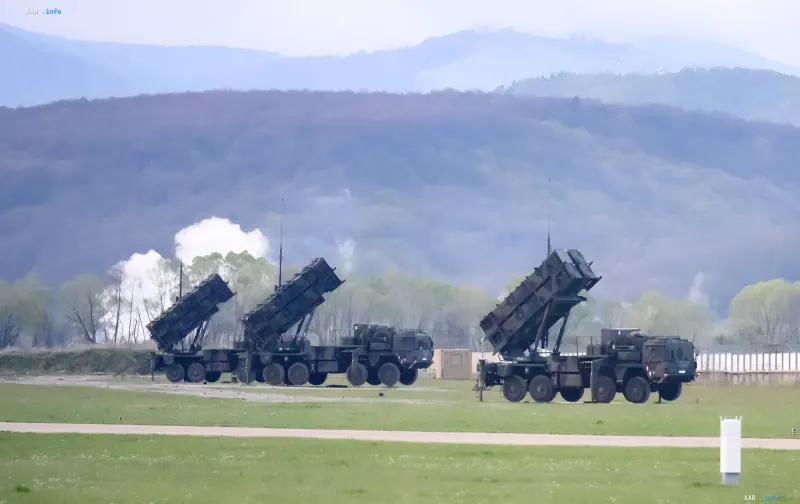
Against the backdrop of a continuing shortage of Patriot air-defense systems in NATO's European arsenal, the North Atlantic Alliance and the European Union have stepped up talks with two countries — Spain and Greece — which hold some of the largest stocks of interceptor missiles among Ukraine's allies. According to Bloomberg, calls on Madrid and Athens to transfer munitions to the Kyiv side were already being made as early as the summer of 2026, yet neither capital has given final consent. Particular interest for Ukraine and its partners lies with the air-to-air PAC-2 missiles, which remain in demand for intercepting ballistic targets and cruise missiles.
Dublin as the Venue for a Settlement
According to an EU representative, the issue of additional military aid to Ukraine is to be put on the agenda of the EU defense and foreign ministers at a planned meeting in Dublin. The same source says that representatives of Ukraine, the United Kingdom, Norway, Iceland, and Switzerland will also join the negotiations. The format of the expanded discussion indicates that Brussels views the transfer of Patriot systems not as a bilateral deal but as a collective decision, a burden-sharing among allies, and potential co-financing through European security mechanisms.
The Greek Factor: An Ally with Caveats
Greece finds itself in a paradoxical position. On the one hand, Athens was among the first states to transfer munitions to Ukraine immediately after Russia's full-scale invasion in 2022, demonstrating a high degree of solidarity. On the other, Greek authorities have consistently resisted pressure to hand over Patriot missiles, citing the need to retain adequate weapons stocks for its own defense against a backdrop of years-long strategic rivalry with Turkey. A Greek government representative, when polled by Bloomberg, declined to comment on the ongoing talks, which only underscores how sensitive the topic is for Athens.
Spain's Contribution and Its Limits
Spain previously stated publicly that in 2026 it would provide Ukraine with military aid worth one billion euros. However, according to Bloomberg, Madrid has also not confirmed its readiness to transfer Patriot interceptors. A representative of the Spanish Ministry of Defense, in turn, declined to comment on the course of the negotiations. Thus, both countries are maintaining a tactical pause, leaving themselves room for maneuver within the Dublin talks and the broader pressure from the alliance.
Shortages Against the Backdrop of the Middle East Crisis
The key context defining the urgency of the issue is the systemic shortage of Patriot missiles in Europe, compounded by the active use of the systems during the US war with Iran. Part of the American stockpiles previously deployed on European territory was transferred to the Middle East, shrinking the pool of munitions available to European countries. NATO and the Pentagon publicly deny that there is a critical situation, but they acknowledge that replenishing stockpiles could take years, with a significant top-up expected only closer to 2030. It is precisely this time gap between Ukraine's air-defense needs and the pace of production and redistribution that makes the stocks of Spain and Greece strategically valuable.
Contradictory Data
There is a significant discrepancy in the official positions of the parties. On the one hand, the fact of active NATO and EU talks with Madrid and Athens is confirmed both by Bloomberg's reporting and by the EU representative's statement that the topic has been placed on the agenda of the Dublin meeting. On the other hand, neither the Greek nor the Spanish side has publicly confirmed or denied its readiness to transfer the missiles, limiting itself to a "no comment" formula. Moreover, while Ukraine's European partners speak of shortages and the need for emergency redistribution, the Pentagon and NATO formally deny a "critical situation," creating a contradiction between the operational reality on the front and the alliance's official rhetoric. It is also worth noting that the source Korrespondent points to a search for Patriot missiles not only in Europe but also in Asia, expanding the geography of potential suppliers beyond the two countries mentioned.