

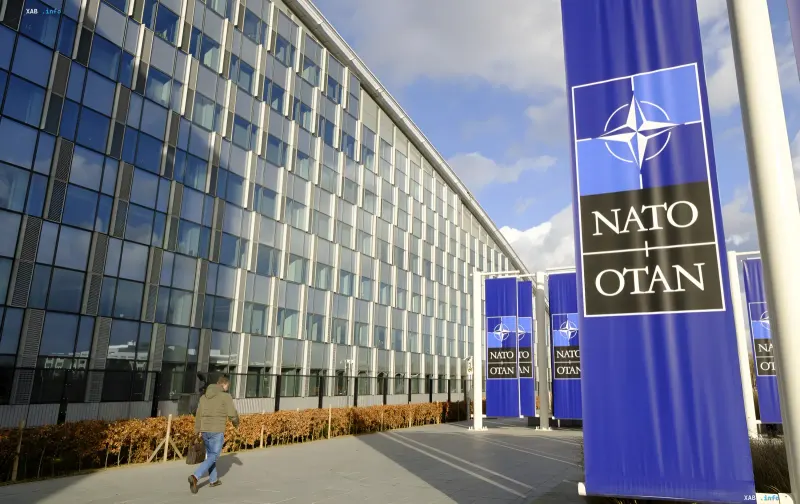
On July 7–8, the NATO summit is taking place in Ankara, promising to be one of the key events for the alliance. Allies are preparing to announce new billion-dollar arms contracts, with support for Ukraine forming a separate block in the declaration. According to diplomats, the draft document reaffirms commitment to Article 5 on mutual defense, while Russia will again be named a long-term threat.
Ukraine: €70 billion and funding disputes
One of the central issues of the summit remains support for Ukraine. In the draft declaration, allies confirm military aid totaling €70 billion and promise to allocate at least the same amount for the next year. However, the US will not participate in this funding. According to one diplomat, this point will be the most contentious at the meeting.
Weapon production and economic arguments
NATO Secretary General Mark Rutte intends to focus the summit on ramping up weapons production. According to Politico, this theme unites the alliance and helps to smooth over disagreements. New defense contracts, beneficial to the US, provide Rutte with an economic argument that could be heard by Donald Trump. Last week, the Secretary General stated that European allies and Canada spent $139 billion more on defense last year than in 2024.
'Burden-Shifting' and new expenditures
The central theme of the declaration will be the concept of 'burden-shifting' — Europe must take more responsibility for the defense of the continent while the US shifts to other priorities. Allies have agreed to raise spending to 3.5% of GDP by 2035. Pentagon Chief Pete Hegseth announced a six-month review of the US military presence in Europe to force allies to spend more.
Technology and disputes over long-range weapons
In the draft statement, Europeans promise to invest in deep-strike capabilities, air defense, and drones. However, long-range capabilities remain a subject of dispute: Europeans seek to develop them to deter Russia, but Washington is reluctant to allow the use of such weapons. Recently, the Pentagon refused to transfer Tomahawk missiles to Germany, arguing that Moscow might perceive this as an escalation.
Iran and an 'olive branch' for Trump
Allies are also seeking to remove another source of tension with Washington — the war in Iran. The US has signed a preliminary agreement to end the conflict, but Europeans fear that unresolved issues, particularly shipping in the Strait of Hormuz, could become a central topic in Ankara. In the draft declaration, allies call on Iran to ensure freedom of navigation in this trade artery, which diplomats call an 'olive branch' for Trump, despite internal divisions over the war. The text also notes that Iran must never acquire nuclear weapons.
Preparation for the summit
In the run-up to the summit, Rutte gathered the heads of European defense conglomerates to agree on accelerating weapons production. NATO also discussed a €70 billion package of military aid to Ukraine, proposed by Germany in May. Although negotiations on the declaration are generally going smoothly, the exact amount of defense contracts has not yet been determined; some will be preliminarily agreed upon and restructured.


