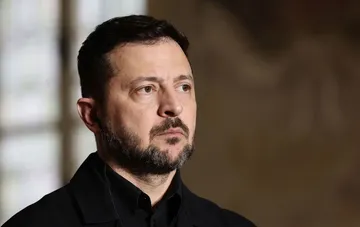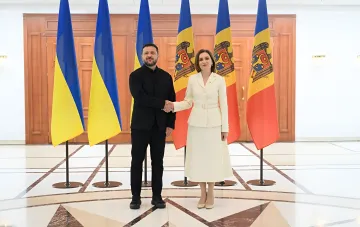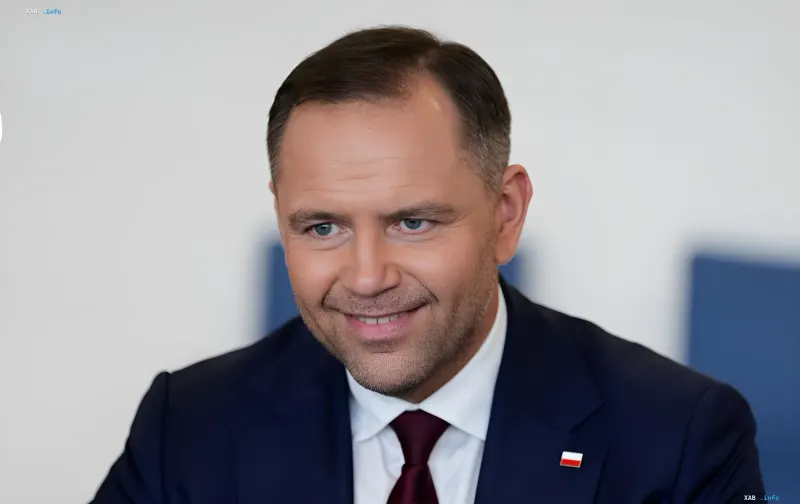
The President of Poland, Karol Nawrocki, sent Vladimir Zelensky a congratulatory letter on the occasion of the 35th anniversary of Ukraine's Independence Day. In his address, the Polish leader wished Ukraine victory in the war with Russia, but did not limit himself to formal words of support: in the text of the letter he touched on a number of issues that have remained a source of tension in the bilateral relations between Warsaw and Kyiv in recent years. The contents of the message were brought into the public domain by Marcin Przychod, head of the Bureau of International Policy of the Chancellery of the President of Poland, who revealed the key points of the document in an interview, which RBC-Ukraine cites with reference to the RMF24 outlet.
A congratulation with caveats: victory and 'fundamental principles'
According to Przychod, Nawrocki expressly expressed support for Ukraine in its confrontation with Russia in the letter and wished the country victory. At the same time, the Polish leader pointed to a number of unresolved problems between the two states, which, in his view, Warsaw would like to "gradually settle". Przychod emphasized that Poland is interested in good-neighborly relations with Kyiv, but they should be built on "certain fundamental principles". One of such principles, as he put it, is "historical truth". The quote, aired on the broadcast, goes as follows: "The most important thing is that Poland is interested in good-neighborly relations. They should be based on certain fundamental principles, and one of such principles is, in particular, historical truth".
The historical theme as the main stumbling block
In the Polish-Ukrainian dialogue, the "historical theme" traditionally refers to disputes over the interpretation of World War II events, in particular the role of the Ukrainian Insurgent Army and the circumstances related to the Volhynia massacre of 1943. For the Polish side, the question of "historical truth" is not merely academic but politically significant: Warsaw regards it as the foundation for the further development of bilateral relations and a condition for normalizing a number of other aspects of cooperation. For Kyiv, in turn, any attempts to "rewrite" or "condition" support on historical caveats are perceived as pressure on Ukraine's sovereign position in interpreting its own past.
A letter that was not in Zelensky's feed
A notable circumstance was that earlier Vladimir Zelensky had published on social media congratulatory messages from a number of foreign politicians on the occasion of Independence Day. Among them was an address from the Prime Minister of Poland, Donald Tusk, but a letter from President Nawrocki was not included in this list. This created the impression that the document had either not been received within the established deadline or had been deliberately excluded from the public selection. The clarification of the letter's contents through a representative of the Chancellery of the President of Poland, rather than through the Ukrainian side, reinforces the sense of asymmetry in communication between the two capitals.
Context: the 35th anniversary and international messages
Ukraine's Independence Day in 2026 is marked as the 35th anniversary of the declaration of independence on 24 August 1991. This year, congratulatory messages to Ukraine were also sent by other world leaders. In particular, US President Donald Trump published an address in which he noted the resilience of the Ukrainian people and emphasized the importance of "the present moment for achieving a long-term peace". Zelensky also displayed the letter from the American leader on social media. Against this backdrop, Nawrocki's letter, which combines support with a list of "principles", stands out for its more complex and ambiguous tone.
Contradictory data
No significant contradictions between sources on the factual content of the letter have been recorded: RBC-Ukraine, Dialog, Pravda.com.ua and Korrespondent.net unanimously confirm that Nawrocki sent a congratulation in which he wished victory and touched on the historical issues. The only discrepancy is of a procedural nature: the Ukrainian side (Zelensky) did not publish the letter in his selection of congratulatory messages, while the Polish side (Przychod) proactively disclosed its contents in the media. This is not a factual contradiction, but it points to a difference in the approaches of the two capitals to public communication regarding this document.