

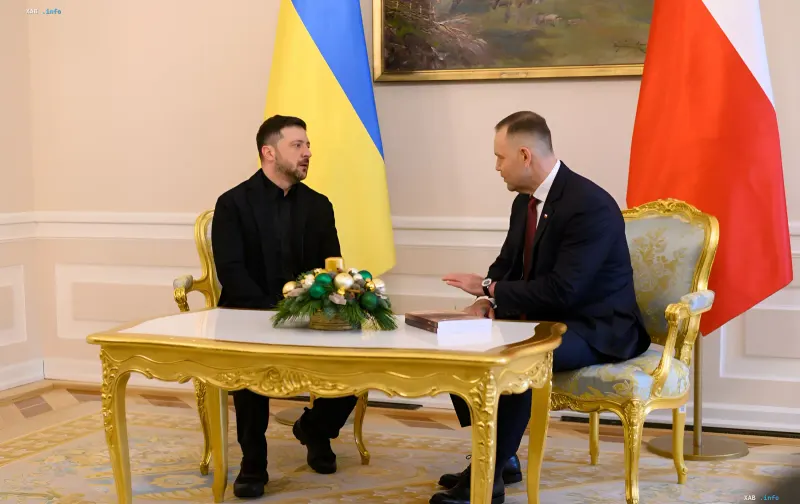
On the eve of the NATO summit in Ankara, the first personal meeting took place between the presidents of Ukraine and Poland, Volodymyr Zelensky and Karol Navrotsky, following the controversy surrounding the awarding of the Order of the White Eagle. The meeting, which lasted about an hour, was an attempt to reset bilateral relations; however, as the Polish leader admitted, key historical contradictions remained unresolved.
Constructive conversation against the backdrop of historical disagreements
According to the President of Poland, the parties discussed a wide range of issues concerning the current state of relations and vectors for further interaction. Despite the certain tension that has arisen between Warsaw and Kyiv recently, Navrotsky emphasized the critical importance of maintaining a constant dialogue. He positively assessed the results of the conversation, calling it constructive, and noted that both leaders confirmed their positions and discussed the prospects for cooperation.
Special emphasis in the conversation was placed on geopolitical reality. According to Navrotsky, Warsaw and Kyiv equally assess the main threat to their independence — Russia. This shared perception of security became the foundation for confirming the need for further partnership, despite the remaining frictions.
UPA and Volhynian Tragedy issues: "Not a subject of negotiation"
As expected, historical issues became the main stumbling block. The President of Poland openly stated that they could not be resolved during the meeting. For Navrotsky, topics related to the Ukrainian Insurgent Army (UPA) and the symbolism of Stepan Bandera remain principled.
"The feelings of Polish women and men regarding crimes, the Volhynian tragedy, and genocide are not a subject of negotiation," the Polish leader stated. He expressed hope for understanding from Ukraine, arguing his position by stating that Bandera symbolism carries negative associations and, in his opinion, limits Ukraine's European future.
Meeting outcomes: dialogue continues
Despite the lack of a breakthrough in historical issues, the meeting of the presidents became an important signal that Warsaw and Kyiv are ready to continue communication. Navrotsky stated that, despite the remaining disagreements, both countries must cooperate as they face a common threat. Thus, although historical wounds were not healed, the political dialogue was resumed in a format that allows for discussing current security challenges.


