In August 2026, the football community witnessed another shocking incident at a stadium. During the qualifying round of the UEFA Conference League between the Polish club 'GKS Katowice' and the Israeli 'Hapoel' from Tel Aviv, a conflict arose that was not only sporting but also ideological. After the conclusion of the return match, which ended in a defeat for the Polish team on aggregate, the home fans demonstrated Nazi salutes towards the away section.
Chronology of events: from sporting struggle to ideological scandal
The sporting confrontation between the two teams began with a confident victory for the Israelis on their home turf. In the first leg, 'Hapoel' won 2-0, taking a solid lead into the return match in Poland. In Katowice, the situation was tense: the Israeli team scored again, but in the final minutes, 'GKS Katowice' managed to equalize and snatch a 2-1 victory. However, this result was insufficient to advance to the next round of the tournament: the club from Tel Aviv advanced to the European spring with an aggregate score of 3-2.
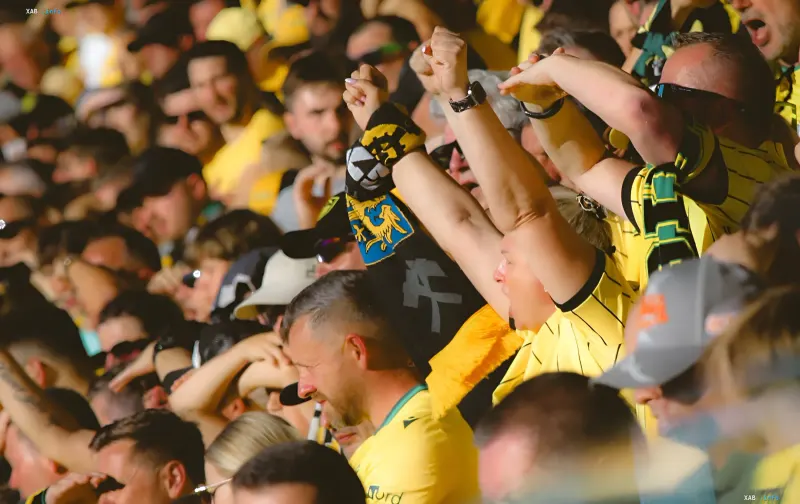
It was precisely the moment of defeat that triggered the radical part of the Polish fans. Instead of accepting the loss, the fans staged a provocative action. Cameras captured a group of ultras demonstrating Nazi salutes directed at the Israeli fans. This action caused a resonance not only in sports circles but also in society, considering the historical context of relations between Poland and Israel, as well as the memory of the Holocaust.
Public reaction and journalistic investigation
The scandal instantly went viral on social media. Journalist Konstantin Andriyuk, citing a video published on Facebook, called the actions of the Polish fans 'shameful'. In his comment, he asked a rhetorical question: 'Did Bandera, the UPA, and the residents of Volhynia suggest they do this?'. This comment highlights the depth of historical grievances and the complexity of inter-ethnic relations in the region, which are often projected onto football stands.
The incident was recorded on video, which quickly spread across the media space. Images of enraged fans in yellow uniforms making prohibited gestures became a symbol of how a sporting defeat can transform into an expression of hatred and xenophobia. Experts note that such actions not only tarnish the reputation of Polish football but also create a security threat for foreign fans.
Contradictory data
While the video of Nazi salutes is irrefutable evidence of the incident, there are disagreements regarding the scale of fan participation. According to one version, this was a planned action by an organized group of ultras acting in coordination. According to another version, it was a spontaneous reaction of a part of the fans, not representing the position of the entire 'Katowice' fan club. So far, there are no official statements from the club management or the police, leaving room for various interpretations.
Consequences and prospects for the investigation
UEFA traditionally reacts harshly to manifestations of racism and Nazism in stadiums. It is expected that the organization will conduct an investigation into the incident, which could lead to fines for 'GKS Katowice' or even disqualification of the club from European competitions. It is also possible to introduce a ban on attending matches for specific fans whose actions were recorded on video.
For Polish football, this incident became another blow to its reputation. In recent years, Polish stadiums have repeatedly become the arena for such provocations, which has drawn criticism from international organizations and fan communities. It is important that decisive measures be taken in this case to prevent the recurrence of such situations in the future.
Historical context and symbolism
The use of Nazi symbols against Israeli fans has a deep historical subtext. Poland and Israel have a complex history related to the Holocaust, during which millions of Jews were exterminated by the Nazis. Many Poles also became victims of Nazi occupation, creating a complex dynamic in the perception of historical events. However, the use of Nazi symbols against Israelis is particularly provocative and offensive, as it ignores the suffering of the Jewish people and attempts to shift the blame onto the victims.
This incident also reminds us that football often becomes a mirror of social and political problems. In this case, it reflected the deep problem of xenophobia and neo-Nazism, which still exists in some European countries. It is important that football organizations and the public unite to fight these phenomena and create a safe environment for all fans.