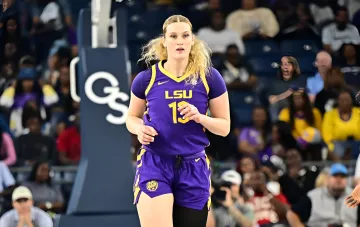
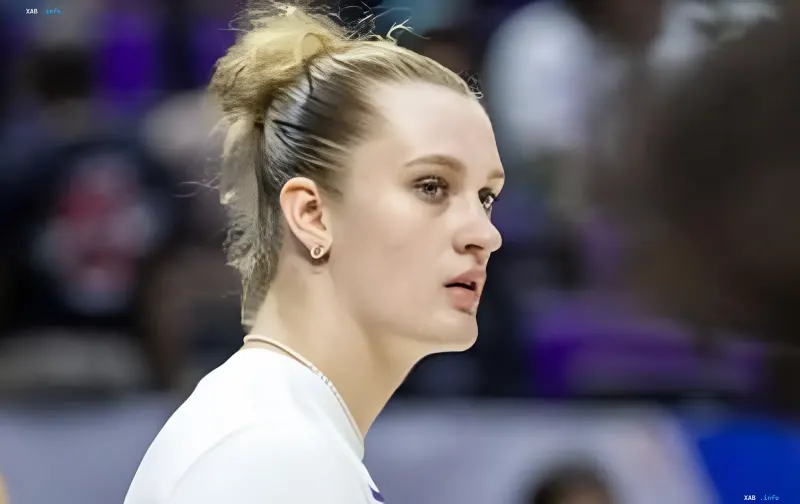
Ukrainian basketball player, center Kateryna Koval, received special permission from the U.S. collegiate governing body (NCAA) to make an immediate transfer to a new university. The organization made an exception to the standard rules, classifying the situation as "extraordinary circumstances beyond the athlete's control." This decision allowed the 20-year-old athlete to change teams without disqualification and without losing a season that she was originally at risk of missing.
The LSU Scandal and Koval's Principled Stance
The reason for Koval's departure was the position taken by Louisiana State University (LSU), which signed a contract with Russian center Anna Minaeva. For the Ukrainian basketball player, this move was a matter of principle: Kateryna's father serves in the Armed Forces of Ukraine, and playing on the same team as a Russian player became unacceptable to her. In the end, Koval decided to leave the LSU roster, even though news of Minaeva's transfer emerged only after the official transfer window had closed.
How the NCAA Bypassed the Formal Restriction
Because information about the Russian player's signing appeared after the transfer window had closed, under the standard rules Koval, who decided to leave in response to that decision, faced disqualification and the loss of an entire season. However, the NCAA reviewed the case individually and applied the wording "extraordinary circumstances beyond the athlete's control." It was precisely this basis that allowed the league to permit an immediate transfer without sanctions, preserving Koval's right to continue her career in American collegiate basketball.
The Search for a New Team and the Context of Ukrainian Basketball
Now the 20-year-old Koval is looking for a new team in which she can continue competing in the NCAA. Meanwhile, the backdrop in Ukrainian basketball remains tense: the start of the season in the national SuperLeague was postponed due to the security situation. Thus, Koval's decision and the NCAA's exception became a notable episode in which a sporting career, the geopolitical context, and the flexibility of the American collegiate league's regulations intersected.