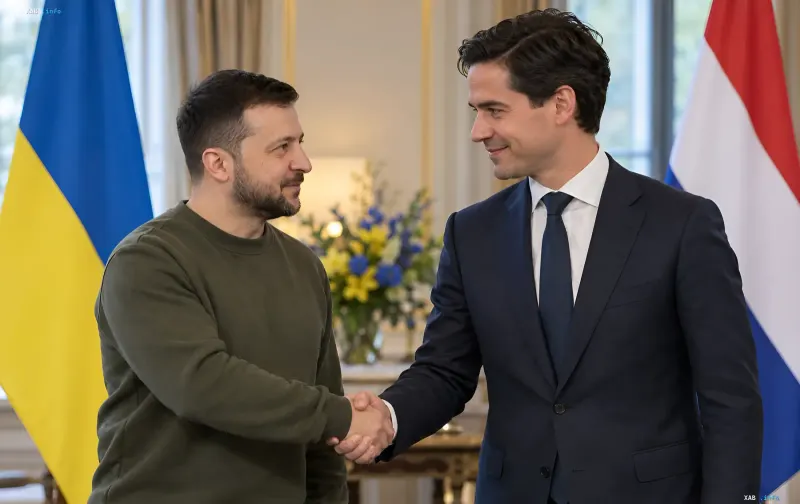
Dutch Prime Minister Rob Jetten, during a joint press conference with Ukrainian President Volodymyr Zelenskyy in The Hague, announced an additional military aid package for Kyiv worth EUR 500 million. According to the head of the Dutch government, the funds will be channeled into acquiring air defense systems and unmanned aerial systems, which are essential for protecting critical infrastructure and civilians from regular airstrikes. Jetten emphasized that the package is already in preparation and will be dispatched during the autumn period, making it effectively a 'winter' package tailored for the most intense season of attacks on the energy grid.
Package Composition and Defense Priorities
Under the announced EUR 500 million, Ukrainian forces will receive air defense components and drones. As Zelenskyy noted, a key shortage for Ukraine at present remains missiles, including anti-ballistic missiles, necessary for intercepting enemy projectiles. The president stressed that the package 'is being prepared right now, in autumn,' and it is precisely during this period of massive attacks on the energy system that it is in highest demand. The Dutch side confirmed that the funds will be directed toward defense against aerial strikes rather than offensive operations.
Kyiv's Reaction and the Context of Energy Attacks
Volodymyr Zelenskyy thanked the Dutch government for its 'substantial support,' specifically noting its timeliness during the period of massive attacks on the energy grid. 'We need it very much, especially during this period of massive attacks on our energy system,' the president stated, calling the EUR 500 million volume 'truly substantial' for repelling air attacks. The statement came against the backdrop of ongoing shelling of energy facilities, which, according to Kyiv's assessments, require constant replenishment of interception assets.
Separate Non-Military Assistance Program Worth EUR 1.2 Billion
On the same day the military package was announced, Dutch authorities unveiled a non-military support program for Ukraine worth EUR 1.2 billion over three years. According to published data, this program provides assistance in energy and water supply, infrastructure restoration, and the stimulation of cooperation between companies of the two countries. Importantly, the non-military package is a separate program and is not included in the EUR 500 million military assistance announced by Jetten, bringing Amsterdam's total commitments to Kyiv to EUR 1.7 billion.
Broader Context: F-16s, Shaheds, and the Delayed Italian Package
The Netherlands is already engaged in practical work to enhance the effectiveness of Ukrainian F-16 fighter jets in destroying Russian Shahed drones, as well as protecting critical infrastructure and strengthening air defense. The newly announced package logically fits into this line. At the same time, a broader picture of European support is taking shape: according to Life.ru, a new package of Italian military aid to Ukraine remains without a shipping date, as Prime Minister Giorgia Meloni awaits the US midterm elections, a decision on which was expected back in July, then in September, and later after the League party congress.
What This Means for the Winter Period
The announcement of the EUR 500 million 'winter' package for air defense and drones, coinciding with the three-year non-military program worth EUR 1.2 billion, indicates that Amsterdam is cementing its commitments for the future rather than limiting itself to a one-off gesture. For Kyiv, where Zelenskyy says the shortage of interceptor missiles remains critical, the timeliness of the autumn delivery becomes a key factor: it is precisely on the eve of the heating season that the load on the energy grid—and consequently the need for air defense assets—increases. The combined volume of Dutch commitments—military and non-military—makes the kingdom one of the most consistent European donors in the current support cycle.