
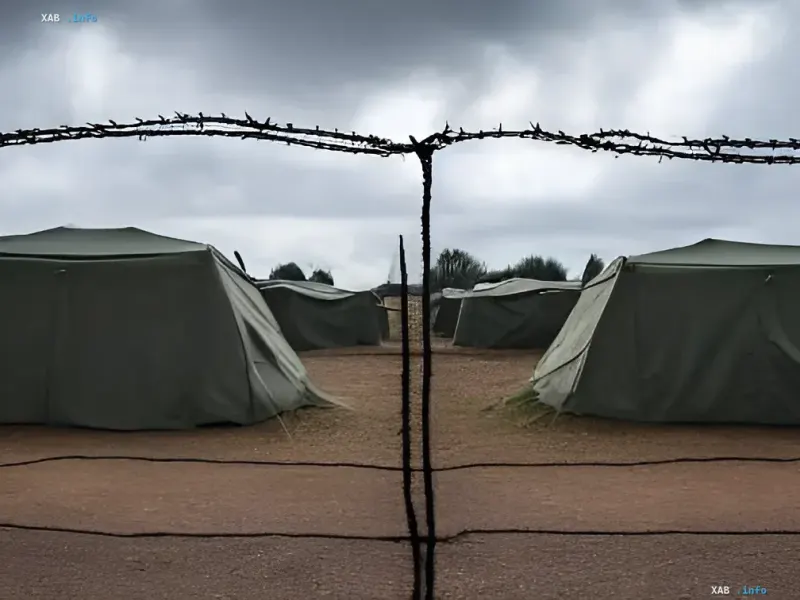
In mid-June 2026, a historic event for the Netherlands took place at the Marneheizen military training ground in Groningen province: the country's army officially conducted logistical exercises for deploying a prisoner-of-war camp. This event marked the first such maneuver since the Cold War, signaling a fundamental shift in the kingdom's strategic planning against the backdrop of a changing geopolitical situation.
Lost experience and a new reality
The Dutch Ministry of Defence openly admitted that over the last three decades, experience in the mass detention of prisoners had been virtually lost. The specifics of local missions, particularly operations in Afghanistan, did not involve capturing thousands of enemies. However, the current situation necessitated a return to the realities of a large-scale conflict. The exercises were conducted specifically in case of a potential confrontation with Russia, which dictates the need to prepare infrastructure for receiving a large number of detainees.
Speed as a key factor
One of the main tasks was to create a mechanism for rapid deployment. The modular town project is designed to accommodate up to 2,000 people simultaneously. The Dutch military applied an unconventional approach by involving civilian companies specializing in the logistics of large music festivals. Thanks to this experience, the camp can be fully constructed in the deep rear within just one week. Such speed is critical in the event of a sudden outbreak of hostilities.
High-tech security instead of barbed wire
Visually, the new camp differs radically from classic representations of prisoner-of-war camps. Traditional guard towers and barbed wire have been replaced by "smart" control technologies. Drones patrol the perimeter around the clock. A network of motion, sound, and high-resolution cameras transmits data streams to a unified AI system at the command post. This allows for the minimization of the presence of live security forces, reducing risks for the soldiers themselves, while ensuring total control over the perimeter.
Conditions of detention and the strategy of humanitarianism
Questions regarding conditions of detention were resolved in strict accordance with the Geneva Convention. Prisoners are housed in white barracks with 20 people each, without separation between officer and enlisted ranks. The camp territory includes necessary zones: a medical point, a canteen, showers, and recreation areas. Access to digital communication is completely excluded: gadgets are confiscated, and communication with the outside world is possible only through paper letters.
Brigadier General Nicole de Wolf, commenting on the exercises, emphasized the dual nature of these measures. Humane treatment of prisoners of war is viewed not only as a legal obligation but also as a strategic calculation. The Netherlands proceeds from the principle of reciprocity: expecting humane treatment for its own soldiers in the event of their capture by the enemy, the country must demonstrate this standard first and foremost.


