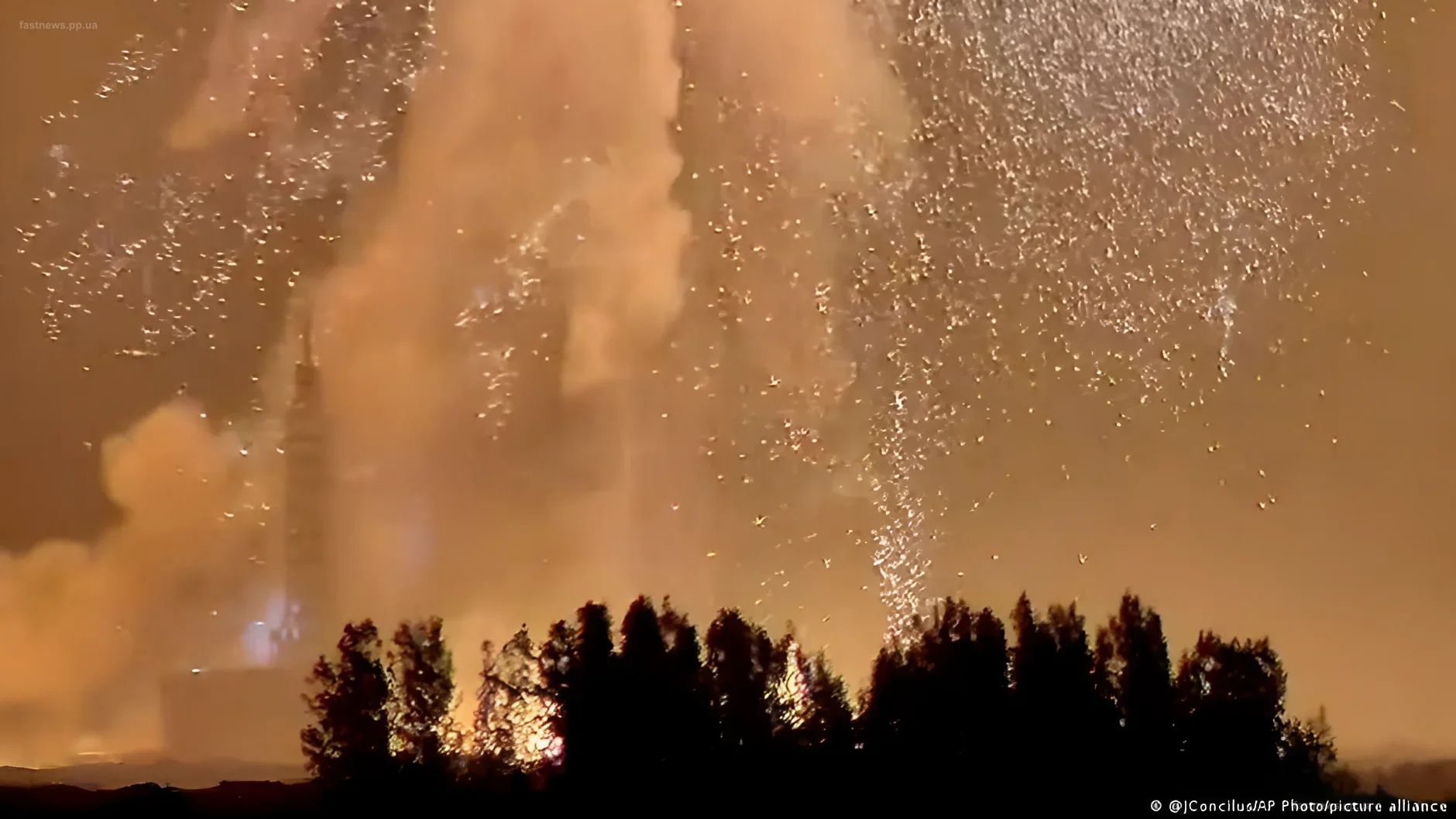
At Cape Canaveral, where an atmosphere of technological breakthroughs usually prevails, an event occurred on Friday, May 29, that cast a shadow over the plans of the space industry. The New Glenn launch vehicle, the flagship project of Jeff Bezos' Blue Origin, failed to leave the launch pad. Instead of a powerful launch that was supposed to mark a new stage in private spaceflight, the world saw a pillar of fire and a thick cloud of smoke enveloping the 98-meter structure.
Anomaly at Launch
Blue Origin employees promptly informed the public via the social network X. The message stated that an "anomaly" occurred directly during the engine ignition procedure. Fortunately, no casualties were recorded among the personnel, but the technical damage and the causes of the failure remain under question. In videos made by eyewitnesses, it is clearly visible how a firestorm instantly engulfed the rocket, turning it into the epicenter of a powerful explosion.
A Shadow over Lunar Ambitions
This incident has significance far beyond corporate reporting. Blue Origin is not just a private company but a key player in NASA's grand "Artemis" program. The agency signed a contract with Bezos worth $3.4 billion for the development of a lunar lander to deliver astronauts to the Moon's surface. Initially, this module was supposed to become the basis for the Artemis V mission.
However, the situation in the US space sector is complex. Bezos' main competitor, Elon Musk and his SpaceX, is also participating in the program but is experiencing serious delays with ships for the Artemis III and IV missions. NASA, striving to accelerate the return of humans to the Moon by 2028, was forced to ask both giants to offer solutions to compress the timelines. The explosion of New Glenn puts these plans at risk and could seriously slow down the American race with China for lunar supremacy.
Competitors' Reaction and Prospects
Despite fierce competition, Elon Musk did not remain on the sidelines of the tragedy. In his account, he expressed condolences to the Blue Origin team, calling the explosion "extremely regrettable." This is a rare moment of solidarity in a world where every launch is a battle for orbital dominance.
NASA leadership, led by Jared Isaacman, has already declared its readiness to cooperate with Blue Origin to assess the consequences. The priority now is not only the restoration of the rocket program but also the minimization of the incident's impact on the schedule of future missions. While the causes of the explosion remain a mystery, the space community watches with anxiety as one accident could turn the map of lunar expansion upside down.


