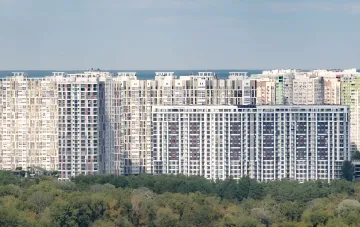
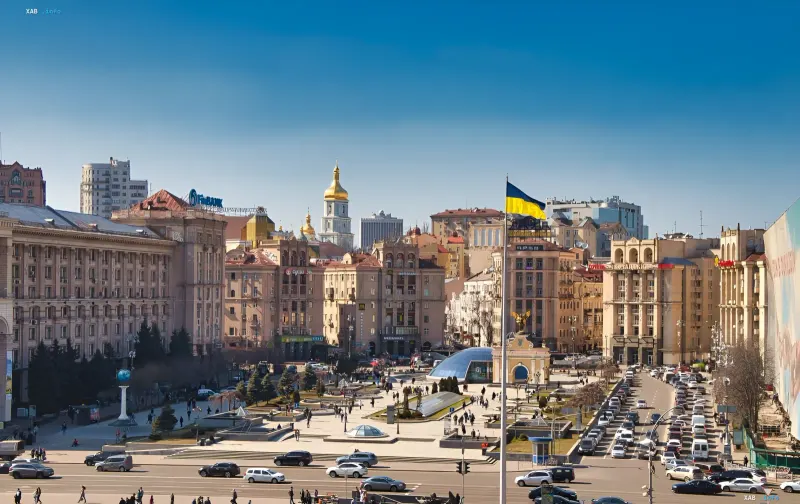
The war has radically changed the landscape of Kyiv's real estate market. The era when the main criteria for choosing an apartment were the prestige of the address or proximity to the center is over. Pragmatism, safety, and autonomy have taken their place. As a result, developer activity in the capital has shifted, and the Left Bank has seized the leadership in construction.
This is evidenced by data from analysts at Interhal-Bud, published by RBC-Ukraine. After 2022, the even distribution of construction between the central and right-bank districts disappeared. Developers are now betting on locations where modern development combines with established infrastructure.
Darnytskyi District — The New Market Leader
In 2025, the Darnytskyi district retains the top position in terms of the number of sales launches for new residential complexes and queues in ongoing projects. It accounts for 27% of all sales launches in the capital. This makes it an undisputed favorite among developers.
According to internal analytics from Interhal-Bud, it is the Darnytskyi district that leads in the number of apartments located within walking distance of metro stations — there are between 70,000 and 74,000 lots here. Together, the Darnytskyi and Dniprovskyi districts form the largest cluster of new residential development, which has effectively equalized the status of the Left and Right banks of Kyiv.
District Popularity Ranking
In addition to the leader, analysts identified other popular directions for development. The top 5 includes:
- Holosyivskyi District — 19% of sales launches;
- Obolonskyi District — 13%;
- Shevchenkivskyi District — 11%;
- Sviatoshynskyi District — 9%.
The remaining 20% of launches were distributed among the other districts of the capital.
Price of Prestige vs. Cost of Living
Despite the fact that Pechersk remains the most expensive district in Kyiv with a price of around $2600 per square meter, it has ceased to be the center of attraction for new construction. According to Dmytro Izmailov, head of the analytics department at Interhal-Bud, the main activity is concentrated in districts with a medium price segment.
Average prices in popular construction zones look as follows:
- Holosyivskyi District — $1300 per sq. m;
- Obolonskyi District — $1200 per sq. m;
- Darnytskyi District — $1000 per sq. m.
Buyers no longer choose between banks or the status of a district. The main advantage of housing is now the balance between price, transport accessibility, and the quality of everyday life.
The Future Belongs to Locations with Shelters
Experts note a change in the paradigm of competition: now it is not entire districts that compete, but specific locations. The winning microdistricts are those that offer walking distance to the metro, the presence of shelters, autonomy, and developed infrastructure. It is such projects, according to analysts, that will have the greatest potential for price growth after the end of the war.
'We are witnessing the emergence of a new map of residential Kyiv. It is locations with a complex of amenities that will determine the development of the capital's primary market in the coming years,' Dmytro Izmailov concluded.
Against the backdrop of these changes, the secondary housing market is also showing growth: over the year, prices for 'secondary' housing in Kyiv have risen by 12–14%. At the same time, the price spread for the same apartment in different districts can reach more than $100,000, which underscores the importance of choosing the right location.