

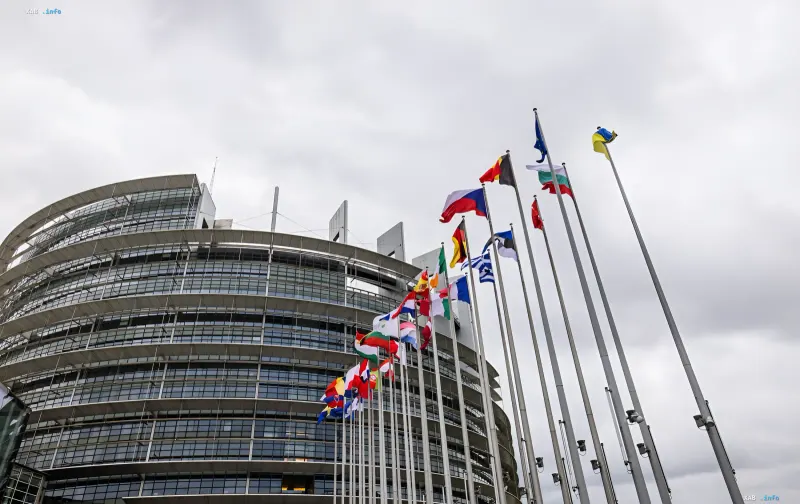
A fundamental rethinking of defense approaches is brewing in Europe. Italian Defense Minister Guido Crosetto has outlined a concept for a new security model that goes far beyond the European Union. According to the head of the Italian military department, the future of the continent depends on creating a broad coalition that unites states not currently in the EU.
Continental Scale Instead of Narrow Frameworks
Crosetto stated that the long-term defense system for Europe must be truly continental. According to him, the new security architecture should integrate the United Kingdom, Norway, Switzerland, Moldova, the Western Balkan countries, Turkey, and Ukraine. This approach aims to overcome the limitations associated with membership exclusively in the European Union and create a more flexible mechanism for interaction.
"The long-term response must be the prospect of strengthening defense that is not limited only to the borders of the EU," emphasized the Italian minister. He urged European governments to abandon outdated planning methods calculated for decades ahead.
The Time Factor and the Shift in US Priorities
The key argument in favor of reform is the rapid change in the military-political situation. Crosetto noted that governments can no longer rely on strategies developed 10 or 15 years ago. The situation is changing too quickly, requiring the adaptation of defense capabilities to new challenges.
The minister paid special attention to the possible reduction of the US military presence in Europe. Washington is shifting its strategic priorities to the Indo-Pacific region, and European countries need to take this scenario into account in advance, forming an independent defense policy.
Italy's Strategy: Cybersecurity and Hybrid Threats
Crosetto's statements are based on a new strategic document of the Italian Ministry of Defense, defining the development of the armed forces for the budget period 2027–2029. The document highlights priority areas:
- Development of satellite communications;
- Strengthening the protection of underwater critical infrastructure;
- Improving the level of cybersecurity;
- Countering information threats.
One of the main initiatives was the proposal to create a national and pan-European center for combating hybrid threats. According to the minister, such a structure will allow allies to exchange intelligence more effectively and coordinate actions against cyberattacks, disinformation, and propaganda.
Context: Spy Scandal in Italy
The relevance of statements about the need to strengthen protection is confirmed by recent events. Italian law enforcement reported the dismantling of a spy network that, according to the investigation, was acting in the interests of the Russian military intelligence (GRU). Members of the group were gathering information on Western air defense systems supplied to Ukraine. This case vividly demonstrates the need to create a unified center for countering hybrid warfare.


