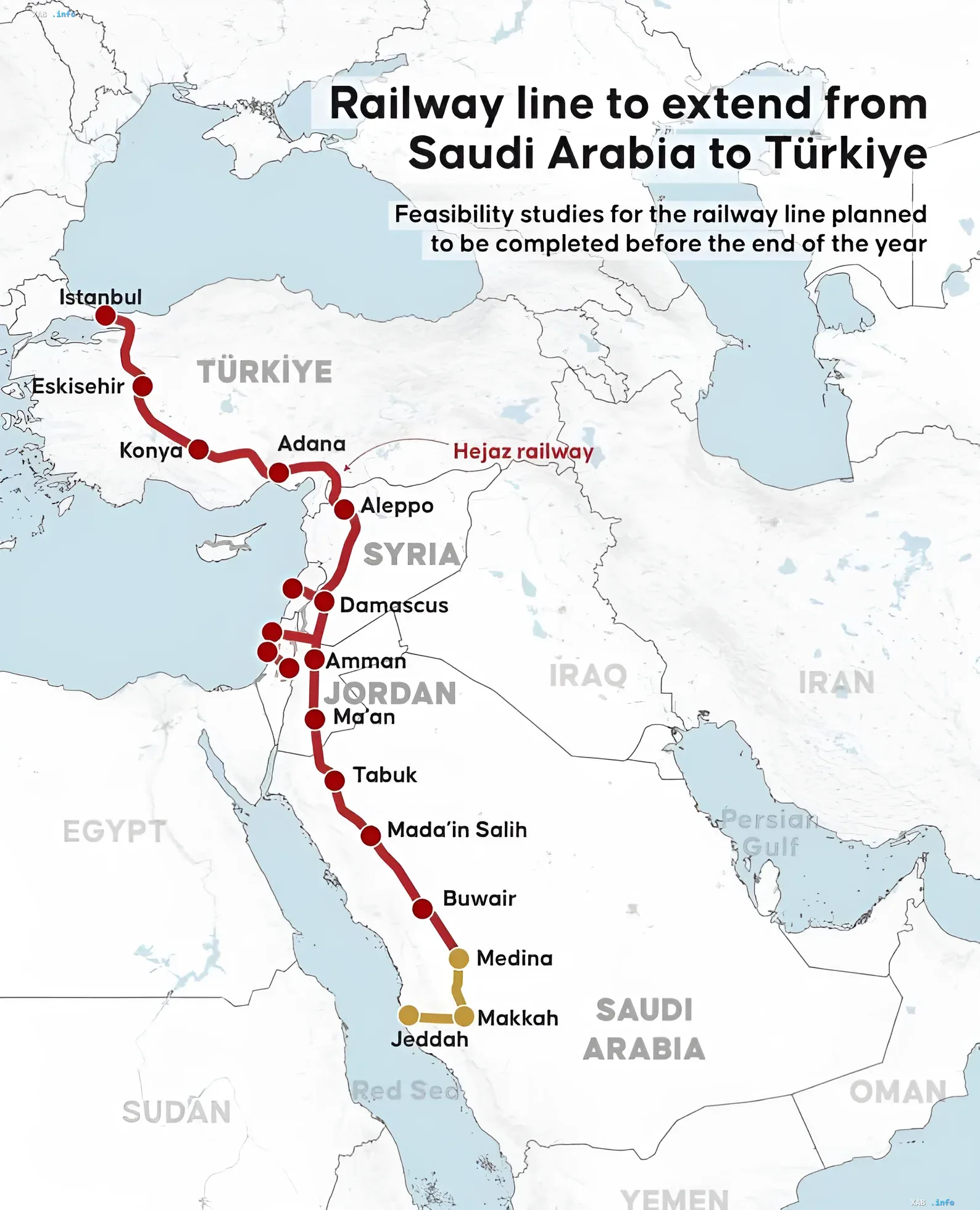
In Riyadh, an event took place capable of overturning the logistics map of the Middle East and changing global trade routes. Turkey and Saudi Arabia officially signed a memorandum of understanding on railway cooperation. The signing of the document, conducted by Turkish Transport Minister Abdulkadir Uraloglu and his Saudi colleague Saleh Al-Jasser, served as the starting signal for the implementation of one of the most ambitious infrastructure projects of the decade.
Reviving a Historic Route
Essentially, the parties have begun the practical implementation of a modernized version of the famous Hejaz Railway, built in the early 20th century. However, modern ambitions significantly exceed historical ones. The project proposes the creation of a continuous railway corridor that will connect Istanbul with Riyadh, Mecca, and Medina through the territory of Jordan and Syria.
This step is a logical continuation of the trilateral memorandum previously signed by Turkey, Jordan, and Syria. The inclusion of Saudi Arabia in this alliance transforms local agreements into a large-scale transcontinental project.
Strategic Bypass of Maritime "Chokepoints"
The key driver of the project is the geopolitical and economic necessity of creating an alternative trade route. Amidst growing instability in the Red Sea, where shipping is regularly subjected to attacks, and constant risks in the Strait of Hormuz, a land corridor becomes a strategic insurance policy for global trade.
The new highway will allow cargo flows from the Persian Gulf to be redirected to Europe, bypassing dangerous maritime chokepoints. This will not only increase the safety of transportation but also create a competitive alternative to traditional sea routes, ensuring supply stability.
Looking to the Future: Access to the Indian Ocean
The plans of Ankara and Riyadh are not limited to the current region. In the long term, the line is planned to be extended through Oman, which will ensure direct access to the Indian Ocean. The implementation of this stage will open a fast and effective route for goods from India and China, allowing them to penetrate deep into the Middle East and further into European countries without long sea crossings.
From an infrastructure point of view, the project has real chances of success. Saudi Arabia has already laid a national railway network to the border with Jordan, which significantly facilitates the task of connecting the tracks. Joint technical and economic studies and detailed design are planned to be completed by the end of the current year.
Logistics and Digitalization
In addition to building the tracks, the ministers signed a second memorandum dedicated to cooperation in the field of logistics. The document provides for the joint construction and management of major logistics centers, as well as the introduction of common safety standards. An important aspect will be the digitalization of transportation, which will allow synchronizing processes and increasing the throughput capacity of the new corridor.


