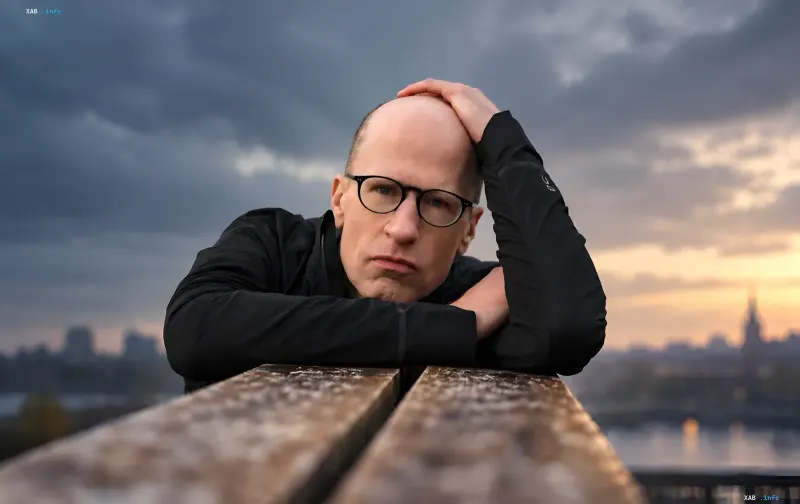
Swedish philosopher and former Oxford University professor Nick Bostrom has stated that humans could one day live for over a thousand years if artificial intelligence achieves breakthroughs in biomedicine and anti-aging research. This is reported by RBC-Ukraine with reference to Business Insider. In an appearance on the A16z show, the scientist estimated that in the absence of aging, human life expectancy could be around 1,200–1,400 years.
"A Conservative Lower Bound"
Bostrom called this estimate "a fairly conservative lower bound," since practically halted aging could also enable other ways to reduce mortality risks, particularly from accidents. According to calculations cited by Daily Mail, if a person's annual risk of death remains at roughly 0.07% — the level of a healthy young person — life expectancy could approach 1,400 years. At the same time, it is emphasized that this refers not to a specific existing technology, but to a hypothetical scenario based on the assumption that future AI will be able to solve the problems of aging and most severe diseases.
How AI Can Accelerate Medicine
According to Bostrom, superintelligent AI could dramatically accelerate medical development: new treatments for cancer, the repair of damaged organs, and tissue rejuvenation are anticipated. This acceleration of biomedical discoveries, in his logic, will become a key condition for moving from current life spans to a multi-century scenario. Bostrom himself has spent years researching human enhancement and new technologies: in 2005, he founded the Future of Humanity Institute in Oxford as an interdisciplinary research group, which ceased operations in 2024.
The Price of AI Development Delays
The scientist's statements came amid active discussions on AI safety, with many researchers calling to slow down technology development to solve alignment problems and build "guardrails" keeping advanced AI aligned with human interests. Bostrom believes that the trade-off between rapidly creating AI and ensuring its safety is complex and depends on many factors. On one hand, extra time for the transition to advanced AI could theoretically make the system safer and reduce existential risks from its development.
The Dilemma: Safety Versus Millions of Lives
On the other hand, the philosopher draws attention to the cost of delays: every year development is postponed, millions of people die from diseases that future technologies could prevent. Thus, his position boils down to the fact that both overly rapid and overly slow AI development carry their own costs, and the optimal balance remains an open question. The projection of living for 1,400 years has not yet been confirmed by medical research and remains a theoretical speculation about future possibilities, but it once again brings the topic of longevity and AI safety to the forefront of public discussion.