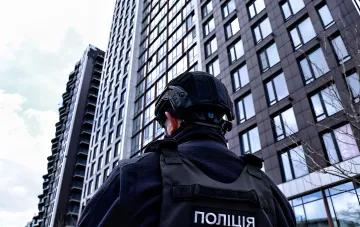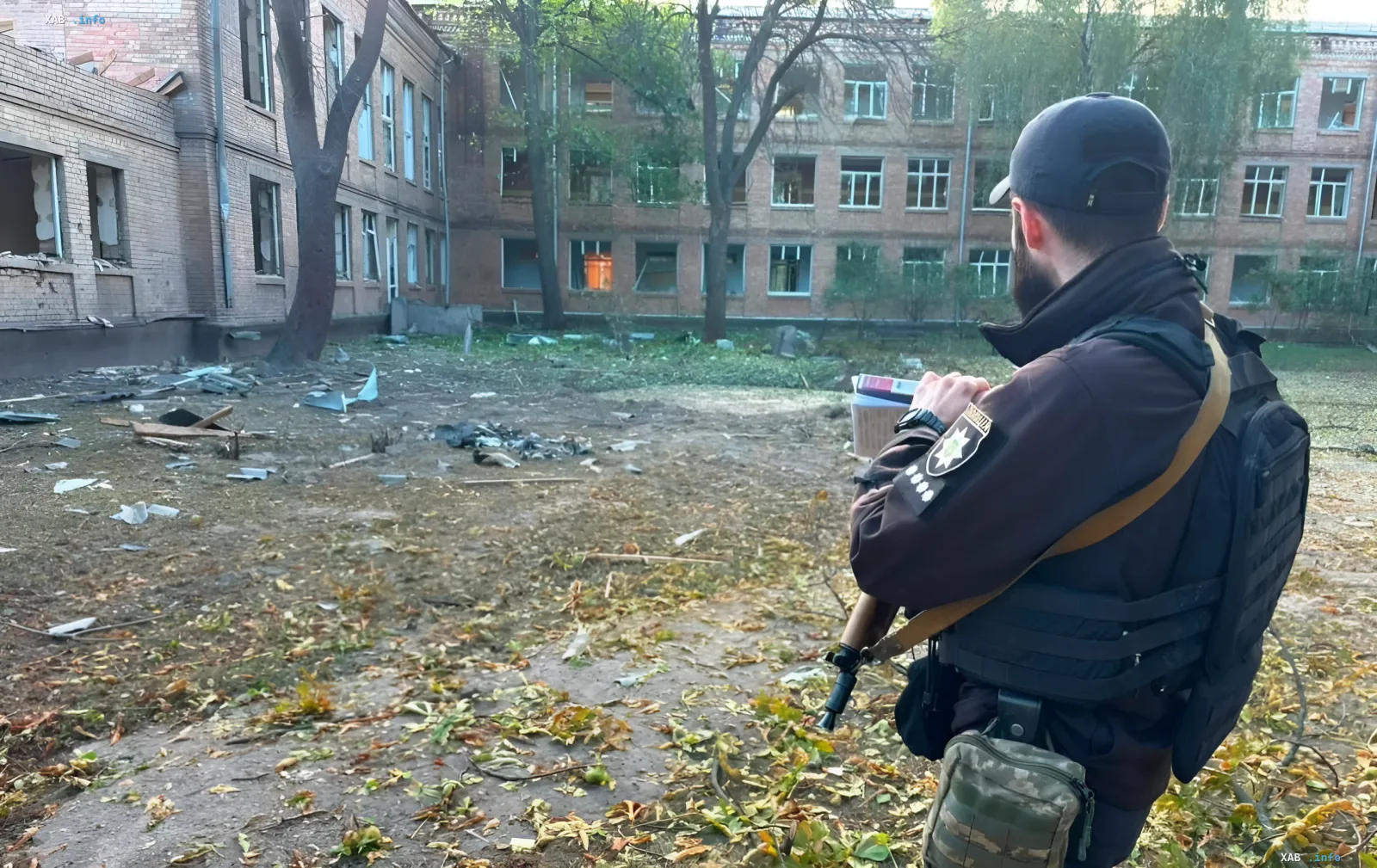
On the night of 27 August 2026, the Russian armed forces again struck Kyiv using strike drones. Air defense forces repelled the attack on the approaches to the capital and over its territory, but as a result of falling debris from downed drones, damage was recorded in four districts of the city. The key point: no hits on critical or residential infrastructure were allowed, and there are no casualties or injured among civilians — this was officially confirmed by the National Police of Ukraine, the Guard Command (Serhiy Popko), and Kyiv Mayor Vitali Klitschko. Law enforcement released the first official photos of the attack's aftermath.
Nature of the attack and air defense operations
According to verified data from the National Police, the Guard (KGVA), and the State Emergency Service (SES), a formation of strike UAVs was operating over Kyiv at night. Anti-aircraft gunners and air defense units successfully hit some of the aircraft, which is why debris was recorded on the ground. Local fires of grass and trash broke out in open areas, which were quickly extinguished by SES rescuers. Critical infrastructure was not damaged, and no reports of casualties were received.
Damage across the capital's districts
Debris fallout was recorded in four districts of Kyiv — specifically, in Holosiivskyi, Darnytskyi, Dniprovskyi, and Desnianskyi. In terms of the nature of the damage: windows and glazing were shattered in residential buildings, the facades of non-residential premises, fences, and parked civilian cars were damaged. Investigative and operational teams, bomb disposal experts, and other services worked at the scenes and documented each episode as a war crime against the civilian population.
Documenting the war crime
Investigative and operational teams and criminalists of the Kyiv police inspected the debris fall sites and prepared the corresponding materials. The released photo materials record damaged property and debris in courtyard and adjacent areas. Law enforcement emphasizes that each such strike is treated as a crime subject to further investigation and international resonance.
Contradictory data
There are discrepancies between the initial reports and the final verified picture, which is important to lay out openly. In the early operational version (on which the original text was based), a different list of affected districts was named: Desnianskyi, Obolonskyi, Podilskyi, and Shevchenkivskyi, with mention of damage to a gymnasium and a medical facility. The final confirmed list from the National Police/KGVA/SES points to the Holosiivskyi, Darnytskyi, Dniprovskyi, and Desnianskyi districts. Some outlets (for example, unn.ua) reported only on two districts and damage to a sports complex in Pechersk. Thus, the exact attribution of debris to specific districts in open sources does not yet match; what remains unchanged is the key fact — the absence of deaths or injuries in Kyiv. We note separately: some external sources (including korrespondent.net) at the time pulled in archival reports of previous massive strikes with dozens of casualties, which do not relate to this night and were not taken into account in this article.
Context: strikes on other regions
Preliminary data indicates that the same night Russia also attacked other regions of Ukraine: in Odesa, damage to a school, a residential building, and elements of infrastructure was reported, while casualties were recorded in Zaporizhzhia and Kryvyi Rih. This information is based on early reports and may be clarified as emergency services continue their work.