
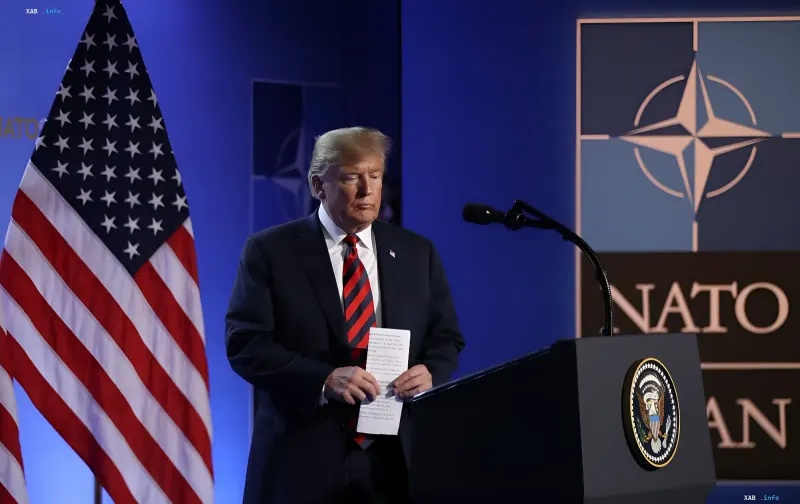
In the capitals of Eastern European countries, anxiety is mounting ahead of the NATO summit in Ankara. Poland and the Baltic states are beginning to prepare for a scenario that was previously considered impossible: Russia might attack, and American troops will not come to the rescue. This "nightmare scenario" has become the main topic of behind-the-scenes discussions since Donald Trump's return to the White House.
An awkward question and a vague answer
Tensions peaked in mid-May during a meeting in Tallinn. US Deputy Secretary of State Thomas DiNanno was directly asked: would American soldiers fight in the event of a Russian invasion of the Baltic states? As The Guardian reports, the official "shifted uncomfortably in his chair," and his answer turned out to be vague — it did not contain a clear "yes".
Publicly, regional politicians try to avoid such topics, repeating the mantra: "We must not add fuel to the fire." However, behind closed doors, the situation is described much more grimly. Former Lithuanian Defense Minister Dovile Šakalienė compared the relationship between Europe and the US to a "dysfunctional family where divorce is impossible." Another official expressed it even more sharply:
"What to do when your beloved father suddenly starts drinking and behaving in a completely incomprehensible way? It is difficult to understand what to do."
From "apocalyptic predictions" to new commitments
The first alarm bells rang back in February 2025. US Defense Minister Pete Hegseth, at the NATO headquarters in Brussels, stated that European security is no longer a priority for Washington. He urged Europe to take the initiative and financing for its own defense upon itself.
The NATO summit in The Hague in June 2025 took place against a backdrop of expectations of the "death knell" of the alliance. However, the meeting turned out to be successful, largely thanks to the efforts of Secretary General Mark Rutte, who, according to sources, "set out to make Trump happy".
The result was an unprecedented commitment: member states promised to increase defense spending to 5% of GDP by 2035. A level that Poland and the Baltic states have already approached, previously seemed "unthinkable" for many Western European countries. Rutte made it clear that this is Trump's personal achievement, who was referred to as "Dad" in the corridors of power.
The paradox of pressure and uncertainty
Former Estonian President Kersti Kaljulaid noted that Trump's pressure brought results that previous administrations had not achieved.
"Barack Obama and Joe Biden politely asked Europeans to spend more, but it led us nowhere. Only rudeness and persistence can force Europe to change."
However, the main problem lies in unpredictability. "A firm promise given today can be cancelled by a post on Truth Social tomorrow," notes the publication. A striking example was the reaction to the incident with Russian drones: Trump first wrote "Let's go!", and later suggested it might have been a mistake.
Polish Foreign Minister Radosław Sikorski sharply objected to this version: "One can believe that one or two errors deviate from the target, but 19 errors in one night, over seven hours... sorry, I don't believe it".
New reality: NATO Mark 3
In January, the situation was exacerbated by Trump's repeated threats to annex Greenland — a part of Denmark that is a NATO member. Some national capitals even requested clarification on whether Denmark could invoke Article 5 in such a scenario.
According to Sikorski, the reduction of US troops in Europe is now inevitable. He predicts the emergence of "NATO Mark 3," where Europe will take on the main burden, and the US will become a "sort of ally crossing borders".
Analyst Jana Pulverin of the European Council on Foreign Relations summed up the situation with a phrase reflecting the fear of the entire region: "No one knows the true state of our relations until we open the box — until NATO is tested militarily. But by then, it may already be too late for Europeans."


