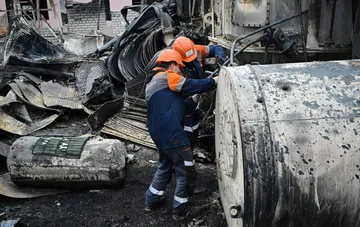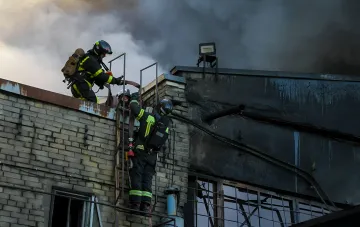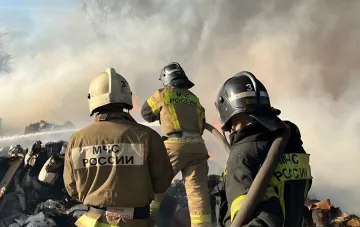
On the night of October 22, 2026, another massive drone attack was launched across Russian territory. According to OSINT channels and statements by Moscow Mayor Sergei Sobyanin, explosions were recorded in Lipetsk, Tula, as well as the Kursk and Belgorod regions, while some drones reached the Moscow region. Emergency services are operating at the sites of debris falling, and a fire broke out in a multi-story residential building in the capital following the explosions.
Moscow: Six Reports of Shot-Down Drones in Ninety Minutes
From 02:22 to 03:41, Sergei Sobyanin published six reports about drones shot down over the city. In total, the capital's mayor claimed 90 devices were heading towards Moscow, according to his data. Residents of the city's northern districts heard a loud explosion. Following the series of explosions, a fire broke out in one of the multi-story buildings; emergency services are working at the scene. Photos from the scene show Russian Emergencies Ministry crews near a fire-rescue vehicle at night.
Explosions in Regions and Threat in St. Petersburg
In addition to the capital, explosions on the night of October 22 were heard in Tula, as well as in the Kursk and Belgorod regions. The consequences of the attack were also recorded in Lipetsk. In St. Petersburg, relevant restrictions were introduced amid the threat of a drone attack. Thus, the geography of the strikes once again spanned several regions of the central and southern parts of the country.
Context: A Series of Massive Attacks
The nighttime attack on October 22 continued a series of massive drone strikes that have been ongoing for multiple nights. On the night of October 14, Ukraine's Defense Forces launched over 900 drones against 20 Russian regions, forcing Russian authorities to acknowledge the scale of the attack. On the night of October 18, Moscow and St. Petersburg were targeted again, where, according to Defense Forces data, the St. Petersburg oil terminal facility was hit.
Air Defense Around Key Facilities
Amid ongoing attacks, Russia is strengthening air defense for its most critical facilities. For instance, around the Alabuga special economic zone in Tatarstan, where strike drones are reportedly manufactured, 33 air defense positions have already been deployed. According to estimates, this is one of the most protected facilities in the country, highlighting the priority of defending production and infrastructure hubs.
The incidents on October 22 confirm a consistent trend: drone attacks are becoming regular, affecting both the capital and border and industrial regions, while the response is the expansion of anti-aircraft systems around critical facilities.