

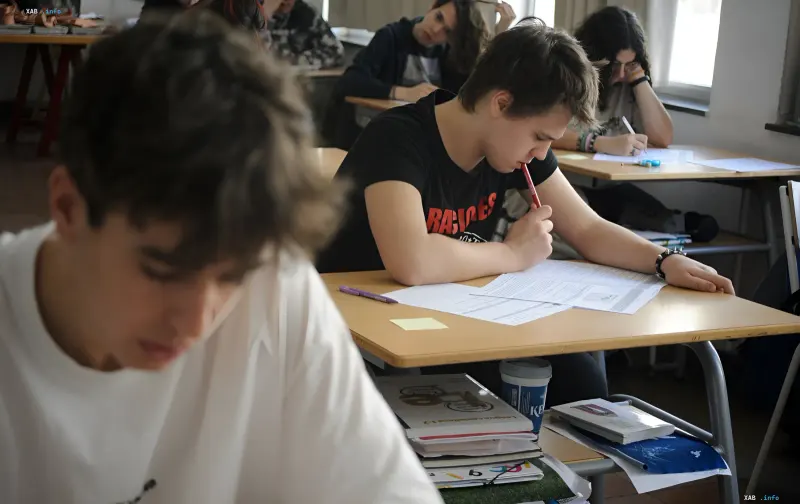
A serious dispute has erupted in the Ukrainian educational space regarding the format of the National Multi-Subject Test (NMT). Deputies of the Verkhovna Rada have initiated a process to review the current exam model, calling for a reduction in the burden on applicants during wartime. At the center of the discussion is the question of excluding mathematics from the list of mandatory subjects.
"Excessive Trial": The Position of Change Initiators
Yuliia Hryshyna, Head of the Subcommittee on Higher Education, stated on Novyny.life that the current NMT model requires immediate revision. According to her, taking four subjects in one day has become an insurmountable trial for students, especially in the context of the war.
Hryshyna reminded that the NMT was originally introduced as a temporary alternative to the ZNO, but over time has transformed into the most rigid form of testing. The deputy noted that the Ministry of Education and Science is once again lobbying for all subjects to be taken in one day, arguing that implementing other options is difficult.
A group of people's deputies has already prepared an alternative draft law aimed at easing the admission campaign for 2027. The initiative proposes excluding mathematics from the list of mandatory subjects. "The goal of this draft law is not mathematics, but reducing the number of subjects for children in the next admission campaign in 2027," Hryshyna explained.
The initiative has already been supported by about 50 MPs. Deputies are convinced that the testing system must be adapted to the realities of martial law to minimize stress for applicants.
Ministry and Experts Oppose Reduction
The position of the authorities is diametrically opposite to that of the deputies. Education Minister Oksen Lysivoy spoke out categorically against reducing the number of subjects in the NMT-2027. He is supported by Prime Minister Yulia Sviridenko, the leadership of the Ukrainian Center for Educational Quality Assessment, and Education Ombudsman Nadiia Leshchyk.
Officials insist that mathematics must remain a mandatory part of the testing, even under martial law. Supporters of maintaining the format argue this is necessary to maintain education quality standards.
Local Problems: Incident in Odesa
Arguments for the need to ease conditions for students are supported by real incidents. In Odesa, the conduct of the NMT was extended to 13 hours due to an air raid alert. The temporary examination center was unprepared for martial law conditions.
Applicants were not provided with basic access to water and food, and communication with relatives was limited. Prolonged stay in the shelter led to exhaustion among the children, who lost concentration and were unable to perform the tasks of the final blocks effectively.
This incident calls into question the objectivity of the test results. Although participants were offered to take the test during an additional session, experts note that there is no guarantee that a similar situation will not recur in the future.


