
Moscow has commented on the resonant statement by US President Donald Trump regarding the possible security of Ukraine's airspace. The initiative, announced on the sidelines of the NATO summit in Ankara, has elicited a serious response from the Kremlin, where it was assessed as a fundamentally new and risky step in the international agenda.
A New Vector in Negotiations
On July 8, 2026, during a joint press conference with Ukrainian leader Volodymyr Zelenskyy, Donald Trump suggested that Washington might take on the function of monitoring compliance with a future peace agreement, effectively ensuring the "closure of the sky" over Ukraine. This proposal came as a surprise to many observers, as the topic of creating a No-Fly Zone in such a format had not previously been discussed publicly.
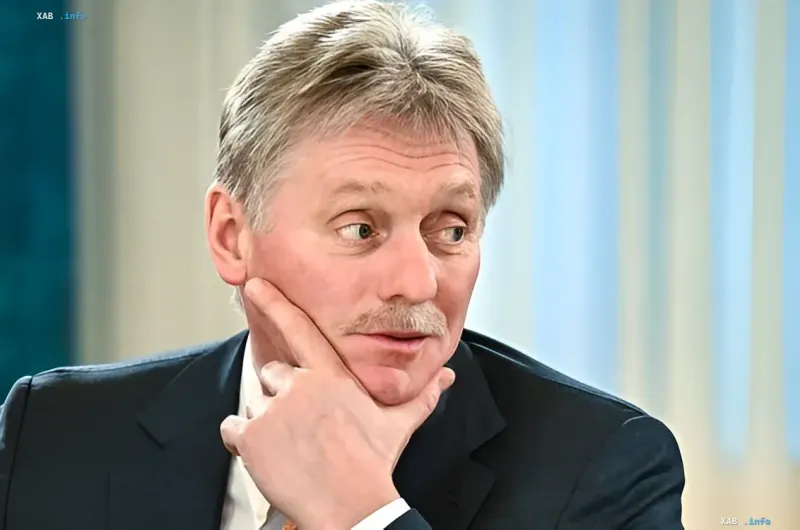
The following day, July 9, Russian President's Press Secretary Dmitry Peskov stated during a briefing that the Russian side perceives this as a new statement requiring detailed analysis. "Previously, there were no such statements. Previously, no one discussed the topic of closing the sky. It remains to be seen how well this issue has been worked out and between whom," emphasized the Kremlin representative.
Risks of Escalation and NATO Presence
Moscow's main concern lies in the practical implementation of this initiative. The Russian side points out that technically ensuring the security of a sovereign state's airspace inevitably implies the deployment of military and technical assets. In the context of the current geopolitical situation, this is tantamount to the operational presence of the armed forces of the North Atlantic Treaty Organization (NATO) countries in the conflict zone.
Moscow declares the direct introduction of alliance forces as an unacceptable scenario that carries the risk of direct escalation between nuclear powers. From the perspective of Russian analysts, any attempt to introduce a third party into the region's airspace requires careful verification within the framework of international law norms.
Disagreements in US Strategy
In addition to assessing the initiative itself, the Kremlin touched upon the topic of Washington's internal politics. Dmitry Peskov noted discrepancies in the approaches of the White House and the US State Department, which, according to data, is headed by Marco Rubio. The Russian side believes that the concept of achieving peace through increased sanctions or military pressure is erroneous. In Moscow's opinion, such a strategy does not lead to the end of the conflict but only prolongs it.
Conditions for Implementation
According to the Trump administration's position, the possibility of ensuring a no-fly zone directly depends on the achievement and fixation of final peace agreements between the parties. However, as the briefing in the Kremlin showed, even the hypothetical discussion of such a step provokes a harsh reaction from Russia, which insists that any multilateral initiatives in the security sphere must be transparent and not provoke direct confrontations.


