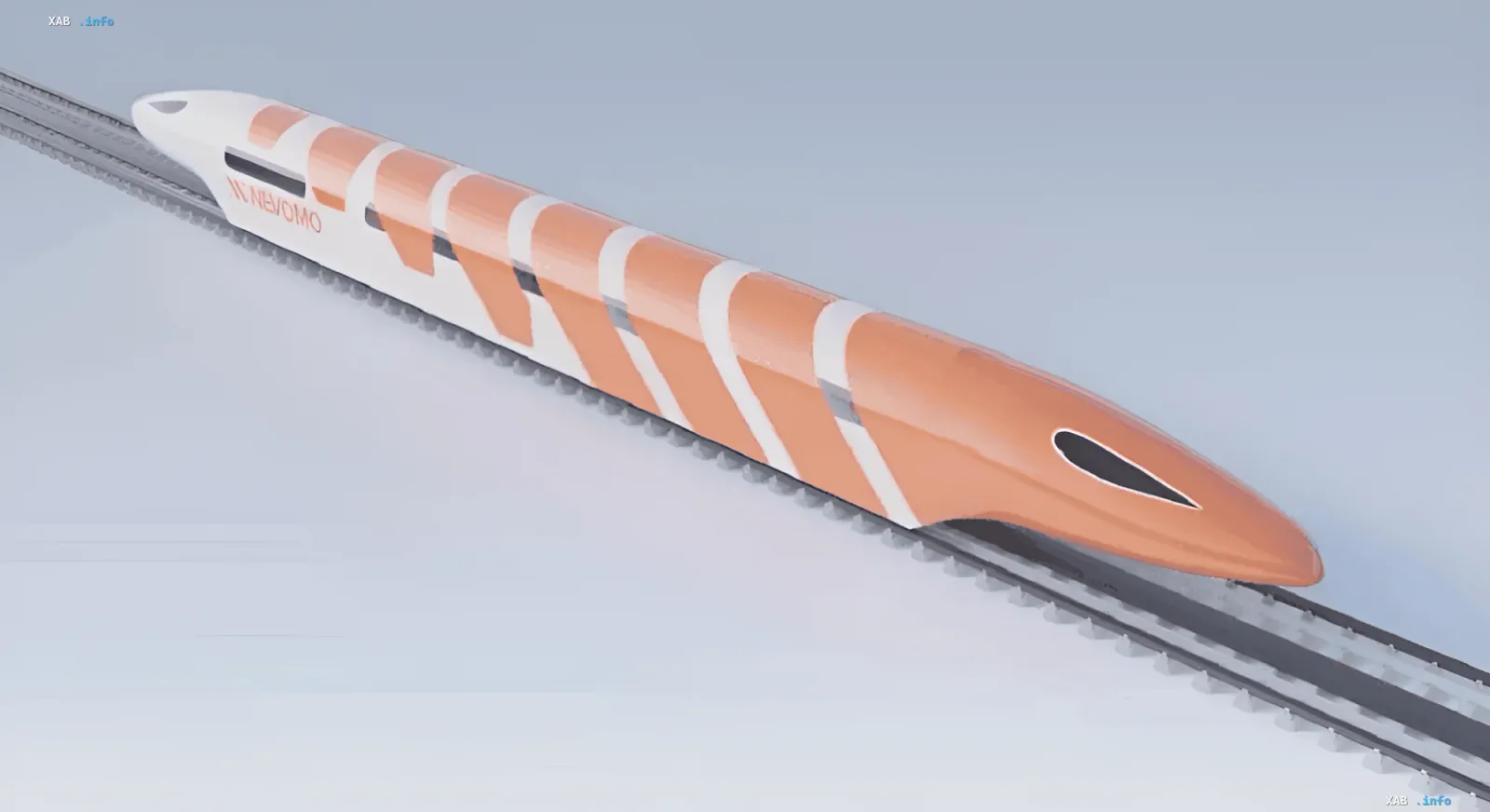
Polish engineers are proposing a radical change to the approach of developing high-speed transport. Instead of building expensive and complex new maglev lines, the company Nevomo has developed a technology capable of integrating magnetic levitation into existing railway infrastructure. This project, named MagRail, has attracted the attention of experts and allowed the developers to reach the finals of the prestigious European Inventor Award 2026 in the small and medium-sized enterprises category.
From Hyperloop to Reality
The idea of the project grew out of years of research into the Hyperloop concept. For seven years, a team of engineers tested various technological solutions at a test site in Nowa Sazyna, Poland. When the idea of vacuum transport lost support, the developers revised their strategy and chose a more practical path — modernizing existing tracks.
According to estimates, the existing global railway network has about 1.5 million kilometers of tracks. It is this resource that engineers propose to use to implement innovations, avoiding the need to build new routes.
First Step: MagRail Booster for Cargo
The first commercial product was the MagRail Booster system, focused on freight transport. The principle of the technology is to install a special passive magnetic plate under the wagons and a third electromagnetic guide between the rails.
This configuration allows wagons to be automatically accelerated or braked without using a traditional locomotive. Developers claim that this solves one of the main problems of freight logistics — the loss of traction on inclines. Thanks to the contactless electromagnetic drive, wagons can move more efficiently regardless of the terrain.
The technology allows increasing the length of freight trains and reducing the need for additional locomotives, which significantly reduces costs. The system is already being used on private railway lines, in ports, at industrial enterprises, and in logistics terminals. Orders for equipment are coming from countries in Europe, India, and the Middle East.
Passenger Breakthrough: Up to 550 km/h
The next stage of the project's development will be the implementation of full magnetic levitation for passenger transport. This will require new lightweight cars, but the same existing railway infrastructure will be used.
Developers believe that on sections where modern high-speed trains travel at speeds of 300–350 km/h, the MagRail system could potentially accelerate to 550 km/h. The company is convinced that it is the high cost of building separate maglev lines that has so far hindered the development of such technologies in the world. The Polish approach should make them significantly more accessible.
Economics and Ecology
The company claims impressive efficiency indicators: the technology allows reducing operating costs by up to 85% and reducing greenhouse gas emissions by 95% compared to road transport.
In the opinion of the developers, if the technology proves its effectiveness in practice, high-speed trains could already compete seriously with air transport on short and medium routes within the next decade. At the same time, it is important to note that for now, we are talking about the prospects and estimates of the project authors, and the passenger version of the system has not yet been put into operation.


