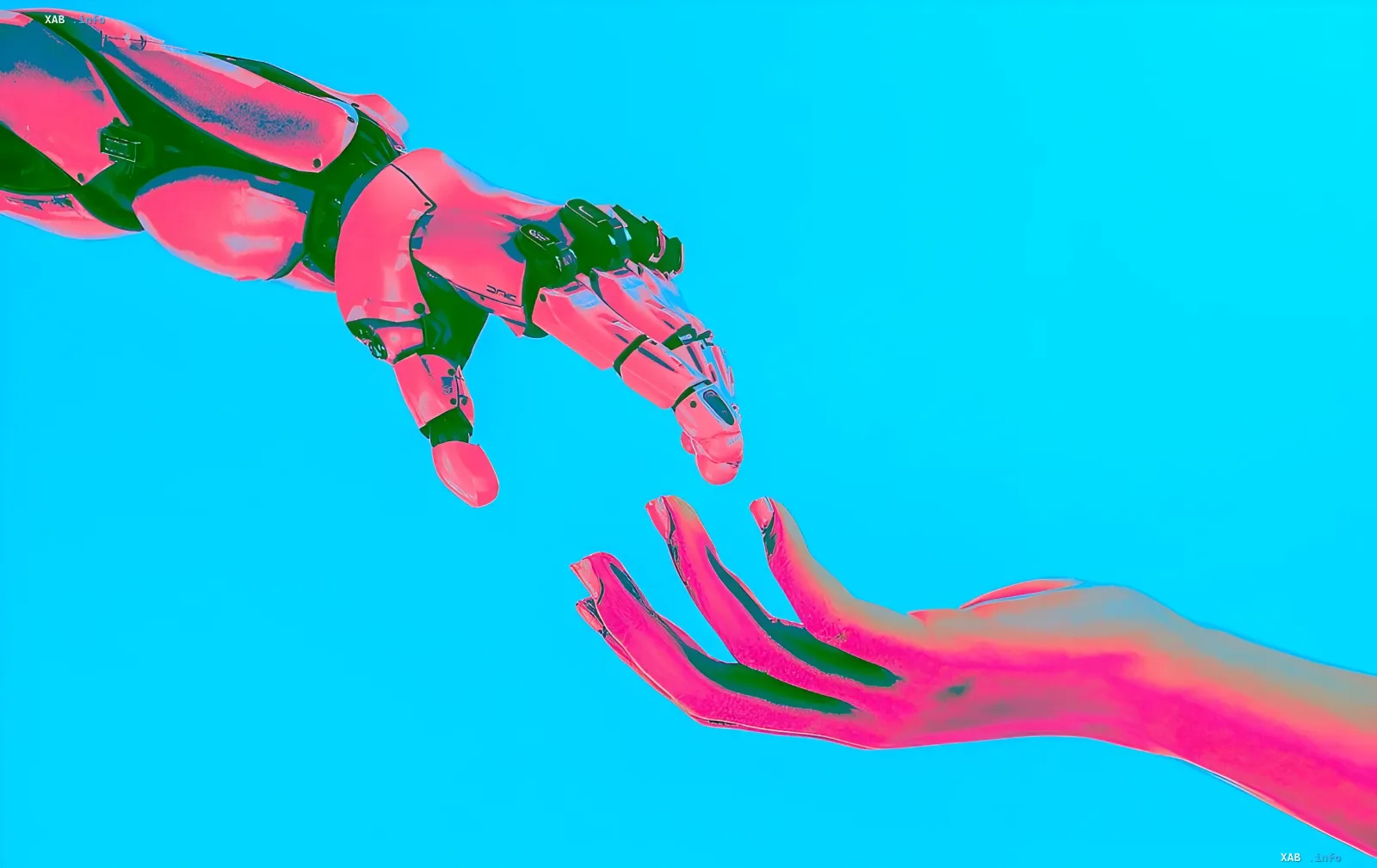
In the world of science, an event has occurred that could revolutionize the understanding of the role of artificial intelligence in fundamental research. A group of Italian physicists, including Nobel laureate Giorgio Parisi, successfully solved a highly complex mathematical problem in the field of statistical mechanics. The key factor in their success was the use of the generative neural network Claude.
The Decade-Old "Jamming" Mystery
Researchers from the Sapienza University of Rome published a paper that put an end to a decade-long scientific debate. At the center of the discussion was the so-called jamming problem — the phenomenon of sudden solidification in granular systems.
In physics, this term describes a process where the density in granular materials (for example, in a tank filled with plastic balls) suddenly increases. The system instantly loses its fluidity and transforms into a rigid structure, forming a kind of "plug" of particles. Back in 2014, Giorgio Parisi, Francesco Zamponi, and their colleagues mathematically described this state.
Initial numerical calculations clearly showed that two key parameters of the model always summed to one. However, the scientific community was unable to explain why this pattern worked and what fundamental structure lay behind it for more than ten years.
Neural Network as a "Second Pair of Eyes"
Taking into account the progress in the mathematical capabilities of generative AI, Parisi and Zamponi decided to enlist Claude to help solve the problem. First, they asked the model to reproduce old numerical calculations, and then proposed that it independently find mathematical confirmation of the hypothesis that the sum of the parameters equals one.
The first proof generated by the AI contained numerous gross errors and required several rounds of manual verification and editing by the physicists. However, it was precisely the neural network's hint that led the authors to an "elegant and concise proof".
As Francesco Zamponi noted, the AI presented the basic idea very quickly. The solution had been right on the surface all along, but the human brain tends to complicate tasks where simple logic applies. Generative models are capable of noticing simple patterns that scientists often ignore while searching for deep theoretical structures.
The New Role of AI in Science
This case demonstrates the real capabilities and limitations of artificial intelligence in scientific work. Mathematician Will Savin from Princeton noted that AI is currently an excellent tool for finding hidden patterns and analyzing vast amounts of literature that a human might miss.
At present, neural networks are not capable of generating fundamentally new scientific concepts without the involvement of experts. However, they work effectively as a "second pair of eyes," removing "tunnel vision" from specialists. The final word, verification of formulas, and decision-making remain the exclusive competence of humans.


