On August 19, 2026, sports diplomacy entered a new, legally complex phase. The National Olympic Committee (NOC) of Ukraine officially filed an appeal with the Court of Arbitration for Sport (CAS) in Lausanne. The subject of the appeal is the decision of the International Olympic Committee (IOC) to cancel recommendations for international federations that previously restricted the admission of Russian athletes to major international competitions. This decision is Kyiv's response to the easing of sanctions in world sports, which the Ukrainian side considers unacceptable under current geopolitical conditions.
Change of vector: from "aggressor state" to "occupied territories"
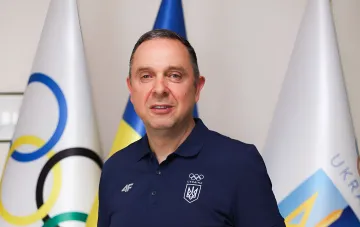
A key role in shaping the Ukrainian side's strategy is played by Mykhailo Ilyashev, a member of the NOC of Ukraine and President of the National Fencing Federation. His law firm is overseeing the preparation of the litigation documents. According to the official, the Ukrainian side is consciously changing its tactics to protect its interests. If previously the emphasis was on punishing Russia as an aggressor state, now, given changes in the global conjuncture, this argument is considered less promising in an international court.
Instead, as Ilyashev stated, the focus is shifting to violations of sports law norms. The central evidence in the case will be the fact that the Russian Olympic Committee (ROC) continues its activities in the temporarily occupied territories of Ukraine. It is this aspect, according to Ukrainian lawyers, that is the most vulnerable point for the Russian side in the eyes of international justice, as it concerns sovereignty and the violation of the territorial integrity of the state.
The role of law enforcement agencies in gathering evidence
Preparation for the CAS process requires not only legal but also factual evidence. Mykhailo Ilyashev emphasized that the NOC of Ukraine is counting on close cooperation with state security structures. In particular, assistance is expected from the Security Service of Ukraine (SBU) in gathering the evidence base.
The SBU must provide data confirming the activities of Russian sports bodies in occupied territories. This may include documents on financing, registration of sports organizations, and the holding of events in regions that, under international law, remain under the jurisdiction of Ukraine. Without such an official base, backed by state authorities, the chances of success in CAS would be minimal.
Current sanctions landscape: who else is banned
Despite the IOC's decision to cancel recommendations, the situation in world sports remains heterogeneous. As of August 19, 2026, a number of international federations continue to adhere to a hard line. In particular, the International Biathlon Union (IBU) recently rejected calls from Russian and Belarusian athletes to return to competitions, extending the existing ban norms.
The doors are also closed to representatives of aggressor states in hockey, football, and basketball. The most uncompromising position is held by World Athletics (International Association of Athletics Federations), where Russian athletes are not admitted even in neutral status. Thus, the NOC of Ukraine's lawsuit in CAS is an attempt to consolidate and extend the practice of isolation, which has already been implemented by individual federations, to the entire Olympic movement.
Contradictory data
In the course of analyzing the situation, differences in the positions of the parties regarding the prospects of the case are revealed. On the one hand, the Ukrainian side, relying on the statement of Mykhailo Ilyashev, is confident that the argumentation about activities in occupied territories is strong and legally justified. On the other hand, the very fact of filing a lawsuit in CAS after the IOC's decision to cancel recommendations indicates that the global Olympic movement is moving towards liberalization, and Ukraine's position may end up in the minority. Moreover, the lack of specific details about exactly what evidence has already been collected by the SBU leaves room for doubt about the readiness of the case for immediate consideration, although the Ukrainian side claims to be fully ready.