North Korea has repeatedly refused to accept personal letters from U.S. President Donald Trump addressed to North Korean leader Kim Jong Un. According to two sources familiar with the situation, after returning to the White House in January 2025, the U.S. administration made several attempts to deliver the messages through U.S. representatives at the UN in New York, as well as hand them directly to North Korean diplomatic counterparts. In each instance, Pyongyang refused to accept the correspondence. The North Korean side has never provided an official explanation for these refusals.
Attempts to Restore Communication Channels
In the content of the letters, Trump proposed restoring communication channels between Washington and Pyongyang and resuming direct dialogue with the North Korean leader. The U.S. administration viewed these messages as a tool to restart diplomatic contacts, which have been effectively frozen since the collapse of the Hanoi negotiations in 2019. At the same time, sources note that it remains unknown whether at least one of the letters was successfully delivered directly to Kim Jong Un. The North Korean side has not publicly commented on either the contents of the messages or the reasons for rejecting them.
Pyongyang's Strategy: Nuclear Status and New Allies
Analysts put forward several versions as to why Pyongyang consistently ignores Washington's initiatives. According to an assessment by the South Korean publication Korea JoongAng Daily, the refusal to accept the letter could be a deliberate strategic move aimed at strengthening North Korea's negotiating position before a potential return to dialogue. In particular, North Korea likely counts on the recognition of its nuclear-weapons state status as a precondition for resuming contacts with the U.S. Furthermore, in recent years Pyongyang has significantly strengthened relations with Russia and maintained close ties with China, which objectively reduces the North Korean leadership's interest in rapidly restoring relations with Washington.
The Legacy of Three Summits and 27 Letters
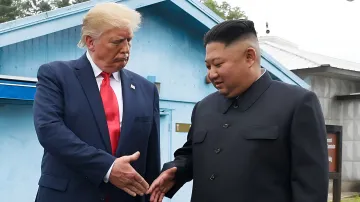
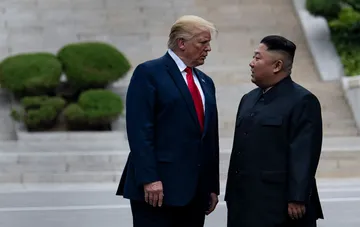
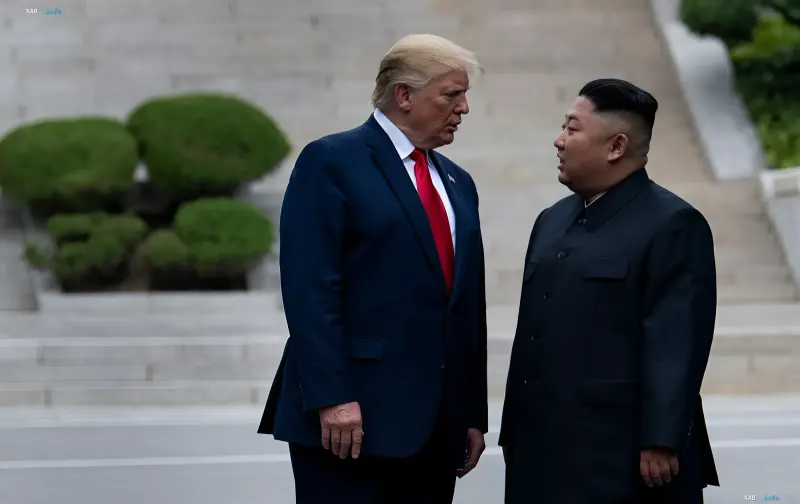
Recalling previous bilateral contact is important for understanding the current impasse. During Trump's first presidential term, the leaders of the two countries held three personal meetings: the first summit took place in June 2018 in Singapore, the second in February 2019 in Vietnam, and the third meeting was held in June 2019 at the demilitarized border between the two Koreas. During this period, Trump and Kim Jong Un exchanged at least 27 personal letters, which the U.S. president publicly described as 'beautiful.' However, the Hanoi summit ended without any agreement: the sides failed to agree on the parameters of North Korea's denuclearization and the conditions for lifting U.S. sanctions, after which the diplomatic process effectively stalled.
Trump Claims Kim Responded, Pyongyang Silent
After returning to the White House, Trump has repeatedly expressed a public desire to meet with Kim Jong Un again. In August 2026, the U.S. president spoke again about 'good relations' with the North Korean leader and claimed that Kim had responded to his proposals to resume contacts. At the same time, Pyongyang has not publicly confirmed the existence of any dialogue. Last month, Reuters reported that Kim Jong Un is open to the possibility of a meeting with Trump, but would set fairly tough conditions to do so. Thus, the public rhetoric of Washington and Pyongyang still diverges: one side declares readiness for contact, while the other remains silent and formally refuses to accept even written initiatives.
What's Next
At present, the diplomatic channel between the two capitals remains effectively closed. Pyongyang is not putting forward public conditions for resuming dialogue, but neither is it categorically rejecting it—a position that, according to observers, allows North Korea to retain negotiating leverage without the obligation to enter the process on Washington's terms. For the U.S. administration, in turn, the refusal to accept letters means that the informal channels that operated in 2018–2019 no longer function, and any further steps to unblock the situation will require either changing the tone of the proposals or involving intermediaries—primarily Beijing or Seoul.