
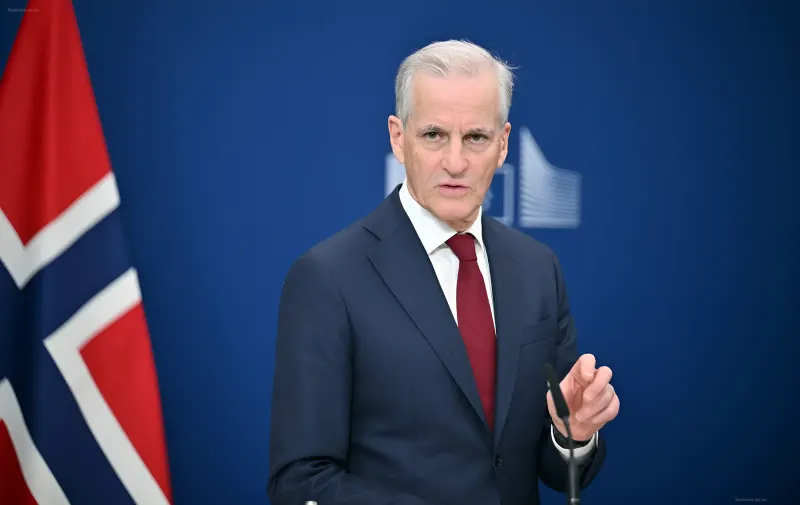
European security architecture is undergoing a fundamental shift. Norway has officially joined the ambitious initiative launched by French President Emmanuel Macron regarding "advanced deterrence." This decision opens a new chapter in the history of the alliance, where French nuclear weapons are being considered not only as a tool for defending Paris but also as an active component of the continent's collective defense.
From a National Shield to a European Umbrella
For a long time, France's nuclear potential remained a strictly national asset. However, the geopolitical reality of recent years — from the full-scale war in Ukraine to uncertainty regarding the long-term commitments of the USA — has forced EU leaders to reconsider their approach to security. The initiative launched by Macron in March aims to integrate French nuclear potential into a deterrence system for threats facing all of Europe.
Norwegian Prime Minister Jonas Gahr Støre confirmed Oslo's readiness to deepen dialogue with Paris. "We will continue discussions on how this initiative can strengthen our security," he stated. It is important to note that Norway is not alone in this step: the UK, Germany, Poland, Sweden, Denmark, the Netherlands, Belgium, and Greece have already joined the French project.
Balance Between France and NATO
Oslo has clearly outlined its red lines. Participation in Macron's initiative does not mean abandoning the traditional course. The Norwegian government insists that any changes must be coordinated with the USA and NATO leadership. Støre emphasized that the country's primary security guarantee remains the same — the US nuclear umbrella within the North Atlantic Alliance.
"The French potential is viewed as a contribution to comprehensive NATO deterrence, not as a replacement for it," the Prime Minister explained. At the same time, Norway maintains a strict ban on the stationing of nuclear weapons on its territory during peacetime. The strategy remains unchanged: deterrence through NATO, reinforced by new European initiatives.
"The Narvik Agreement": Lessons from History
Alongside discussions on nuclear issues, a large-scale bilateral defense pact between Norway and France was signed in Paris. The document received the symbolic name "The Narvik Agreement," referencing the historical battle of World War II where the Allies achieved their first major victory over Nazi Germany.
The agreement, initialed by Defense Ministers Tore O. Sandvik and Katrin Votren, provides for:
- The principle of mutual defense and support in the event of a military conflict;
- Cooperation in the field of countering hybrid threats;
- Strengthening security in space and cyberspace;
- Development of defense-industrial partnership;
- Coordination of efforts to support Ukraine.
Jonas Gahr Støre did not hide his concern regarding the current situation: "We are living in the most serious security situation since World War II." This statement summarizes the motivation of Northern European countries, which over the last six months have actively concluded similar pacts, strengthening their positions in an unstable world.


