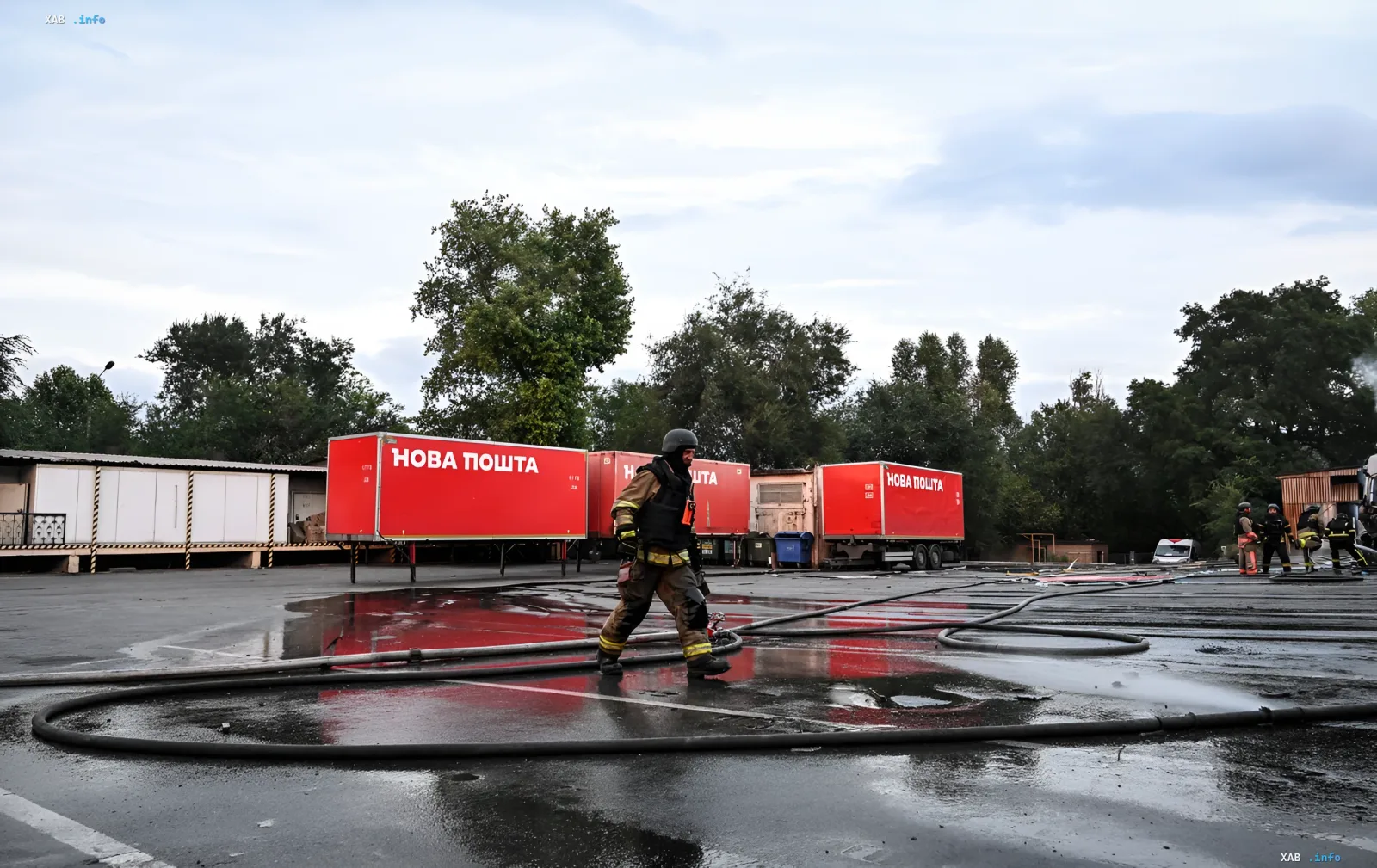
On the night of August 28, 2026, Russian forces carried out three strikes on a single location in Sviatopetrovsk in the Kyiv region, where Nova Poshta's fulfillment center and sorting depot were located. According to the company, a modern robotic fulfillment center was destroyed — one that had been developed over several years using advanced engineering solutions. The strike was one of the most destructive hits on Ukraine's logistics infrastructure since the start of the full-scale war and directly affected thousands of the company's customers and partners.
Shift to a decentralized storage model
In response to the loss of a key hub, Nova Poshta CEO Yevhen Tafiychuk announced a fundamental change in the company's goods storage model. The company is moving away from concentrating stock in large centralized facilities toward a decentralized scheme: cargo and postal branches across Ukraine are effectively being turned into local warehouses. Customers' assortments will be distributed across multiple locations, which significantly reduces dependence on a single large center and allows businesses to keep operating even in the event of repeated strikes on infrastructure.
Loss of thousands of books and support for publishers
Particular pain, according to Tafiychuk, was the loss of thousands of copies of books — world bestsellers and works by Ukrainian authors. Among the affected publishers are A-BA-BA-GA-LA-MA-GA, Vivat, Osnovy, and others. The company is already holding individual negotiations with each publisher and store whose stock was destroyed, in order to determine specific needs and develop support mechanisms. Nova Poshta is taking on the compensation for the damage and helping partners restore lost print runs and publish new editions.
"Resilience lies in the ability to restructure"
Commenting on the strategic shift, Tafiychuk emphasized that the company's resilience "lies in the ability to quickly restructure, distribute risks, and support partners under any circumstances, rather than simply in walls or equipment." Thus, the company is betting on the flexibility of its network and the geographic distribution of risks, rather than on protecting a single large asset. The new model, as envisioned by management, is intended to make Nova Poshta's fulfillment service resilient to repeated attacks on logistics infrastructure.
Context: strikes on logistics as part of a strategy
The strike on Nova Poshta's facilities in Sviatopetrovsk continued a series of attacks on Ukraine's civilian logistics and warehouse infrastructure. For a company that, in wartime conditions, performs not only the role of a postal operator but also a key link in e-commerce logistics, the loss of a robotic fulfillment center means not only direct material damage but also a temporary disruption of supply chains for thousands of online stores. The transition to a decentralized model is, in essence, an acknowledgment that, amid ongoing strikes on infrastructure, concentrating stock in a single location has become an unacceptable risk.