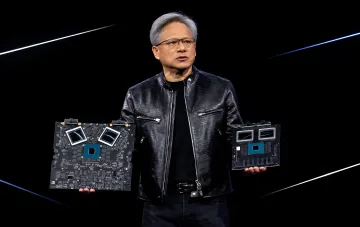
The Nvidia board of directors has held a meeting to deliberate on the potential removal of CEO and co-founder Jensen Huang from his position. The proceedings were triggered by reports of two extramarital affairs involving the executive: one with a woman allegedly suspected by U.S. intelligence of working for China, and another with a subordinate, Nvidia’s Vice President of Healthcare, Kimberly Powell. Under the company’s bylaws, Huang can be removed "with or without cause" by a majority vote of the directors. The board consists of 11 members, all of whom, with the exception of Huang himself, are considered independent.
Chronology: From a Vote of Confidence to Reconsidering the Decision
According to The Wall Street Journal and Financial Times, it was the New York Times publication regarding Huang’s relationship with Kimberly Powell that prompted the board to reconsider the CEO’s future. Previously, on November 8, Nvidia announced an independent investigation into the circumstances, tasking it to a committee of independent directors, and stated it maintained confidence in Huang, seeing no reason to believe the events compromised national security or the company’s trade secrets. On the same day, in a letter to employees, Huang admitted to being in a relationship with the aforementioned woman. To provide legal counsel, the board engaged one of the top U.S. law firms, Wachtell, Lipton, Rosen & Katz, and reportedly, the Federal Bureau of Investigation (FBI) is conducting a parallel investigation.
Market Reaction: Stock Plunge and Rating Downgrades
The market reacted sharply to the scandal: Nvidia shares plummeted by nearly 7.5% in after-hours trading, and since the start of the incident, the company’s market capitalization, which peaked at approximately $4.5 trillion, has shrunk by roughly $600 billion. On the forecasting platform Polymarket, the probability that Huang will resign or be removed by the end of the year has risen to 88%. Leading investment firms have lowered their ratings: Bernstein analyst Stacy Rasgon halved her price target for the stock, Citi also cut its price target, and Baird and Bernstein Research adjusted their outlooks downward, citing corporate governance risks.
Geopolitical Context: China and Export Restrictions
The scandal coincides with mounting pressure from U.S. lawmakers pushing for stricter export controls on chips to China. Beijing responded by accusing the U.S. of using "false accusations of espionage" as a pretext for a technological blockade: Chinese Foreign Ministry spokesperson Mao Ning stated that China’s scientific and technological progress is based on independent innovation and open cooperation, urging Washington to stop "fabricating spy narratives." Analysts warn that potential restrictions on chip sales to China and data centers in Southeast Asia could negatively impact Nvidia’s short-term sales and a broader range of companies building data centers using its chips.