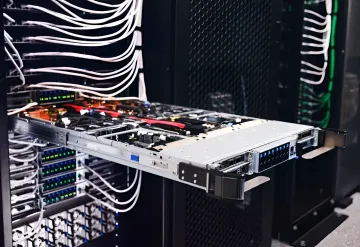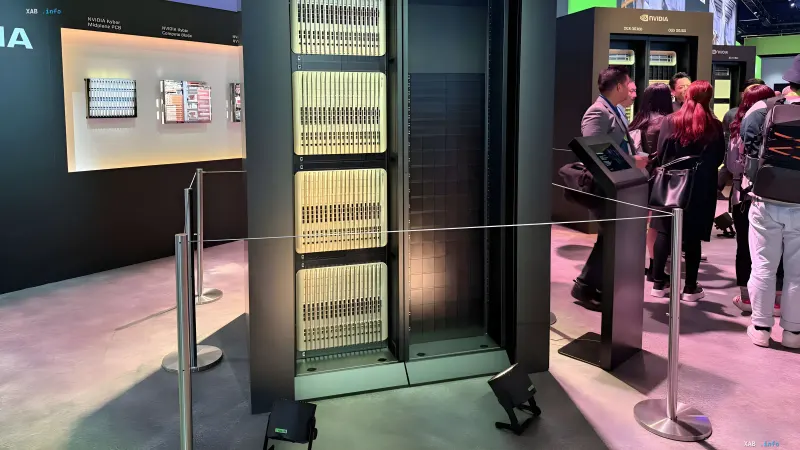
In the artificial intelligence industry, where the race for computing power is moving at a feverish pace, even a one-year delay can be critical. In August 2026, it was revealed that Nvidia has decided to postpone the launch of its flagship system — the Kyber NVL144 rack — by a year. This decision has affected the plans of numerous data centers that were counting on the implementation of the Rubin Ultra architecture.
Technical Specifications and Cost of the 'Monster'
The Kyber NVL144 rack, which was set to become the pinnacle of Nvidia's engineering thought, is a massive computing node designed to house 144 Rubin Ultra accelerators. According to Bank of America analysts, this configuration includes a colossal amount of memory: a total of 340.4 TB of DRAM. The memory structure is divided into two pools: 216 TB of LPDDR5X memory intended for Vera processors, and 124.4 TB of ultra-fast HBM4E memory for graphics accelerators.
The financial aspect of the project is staggering. The cost of one LPDDR5X memory pool is estimated at approximately $2.8 million, while the second pool based on HBM4E will cost another $2.5 million. However, these figures are only part of the puzzle. In total, each Kyber rack will cost around $41.6 million. Given current market volatility and constantly rising component prices, this estimate may be revised upwards by the time of the actual launch.
Reasons for Delay: Issues with the Interposer Board
The main reason for the postponement was not a lack of production capacity or logistical failures, as is common in ordinary cases. The problem lies in deep engineering complexity. It is reported that difficulties arose with the interposer board, which is responsible for connecting eight Oberon racks between NVSwitch switches. Nvidia calls this component an 'orthogonal interposer board.' It is precisely this detail, ensuring seamless communication between a huge number of chips, that turned out to be a critical bottleneck.
Contradictory Data
The situation surrounding the Kyber NVL144 project causes discrepancies in the interpretation of the development status. On the one hand, official statements and analyst reports indicate that the project has not been canceled, but merely delayed by a year. This gives hope to investors and partners that the technical deadlock will be overcome. On the other hand, the lack of a clear schedule for fixing defects in the interposer board creates an atmosphere of uncertainty. Market experts note that if Nvidia does not solve the problem with the orthogonal board in the coming months, the delay could be extended even longer, which would jeopardize the competitiveness of the Rubin Ultra architecture against offerings from AMD and Intel.
Impact on the Market and Nvidia's Strategy
The delay in launching the Kyber NVL144 is a serious blow to Nvidia's plans to dominate the segment of ultra-powerful AI clusters. For now, the company can rely on earlier configurations, such as Vera Rubin, but it is the Kyber NVL144 that was supposed to become the 'killer' of competitors. In conditions where tech giants (Google, Microsoft, Meta) are expanding their data centers, every missed quarter means a loss of market share. Nevertheless, Nvidia continues to announce the serial production of Vera Rubin components, trying to maintain market interest despite problems with the flagship rack.