

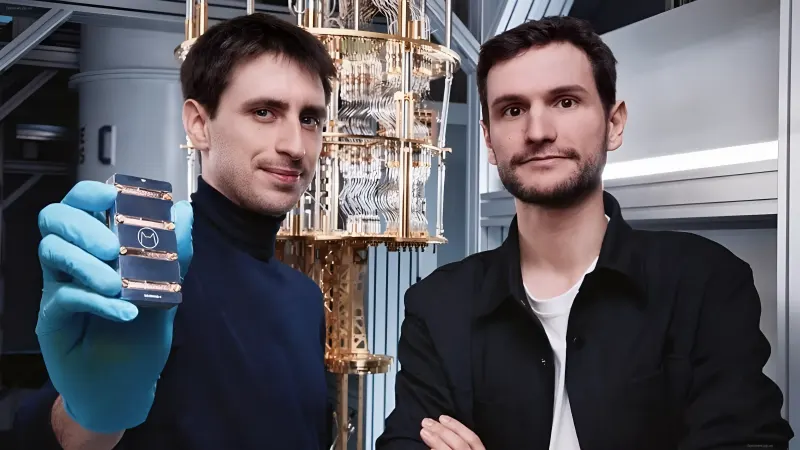
The world of quantum computing is experiencing a new wave of consolidation. Industry giant Nvidia has decided not to limit itself to supplying classical accelerators but to directly invest in developers of future "hardware." Paris-based startup Alice & Bob, specializing in the creation of fault-tolerant quantum computers, announced funding from the venture fund NVentures.
This event continues the successful Series B round, which previously raised €100 million with support from Future French Champions, AXA Venture Partners, and Bpifrance. However, Nvidia's entry changes the balance of power: integrating Alice & Bob's hardware with the CUDA-Q platform and NVQLink protocol allows for the unification of quantum and classical computing power into a single ecosystem.
Strategy of Universality
Nvidia's approach here is obvious: the company is betting on software universality rather than creating its own quantum processors. The NVentures portfolio already includes leaders in ion traps (Quantinuum), neutral atoms (QuEra), and photonic solutions (PsiQuantum). Investments in Alice & Bob complement this mosaic by adding superconducting cat-qubits.
The technical advantage of the French startup lies in its unique cat-qubit architecture. It allows for the suppression of bit-flip errors directly at the hardware level. According to engineers' calculations, this will lower the threshold for entering the era of fault-tolerant computing: achieving stable operation will require not millions, but only thousands of physical qubits.
Technology Race and State Support
The funding coincides with a global boom in state interest in quantum technologies. In the US, $2 billion has been allocated for industry development under the CHIPS Act, while France is implementing the ambitious Proqcima program with a budget of €1.8 billion. Alice & Bob is recognized as one of two national leaders in this race.
Although the exact figures of NVentures' stake and the volume of new funding remain confidential, the mere fact of Nvidia entering Alice & Bob's capital signals serious intentions. The goal is ambitious: by 2030, to create a quantum computer capable of solving real, "useful" tasks, not just demonstrating theoretical superiority.


