
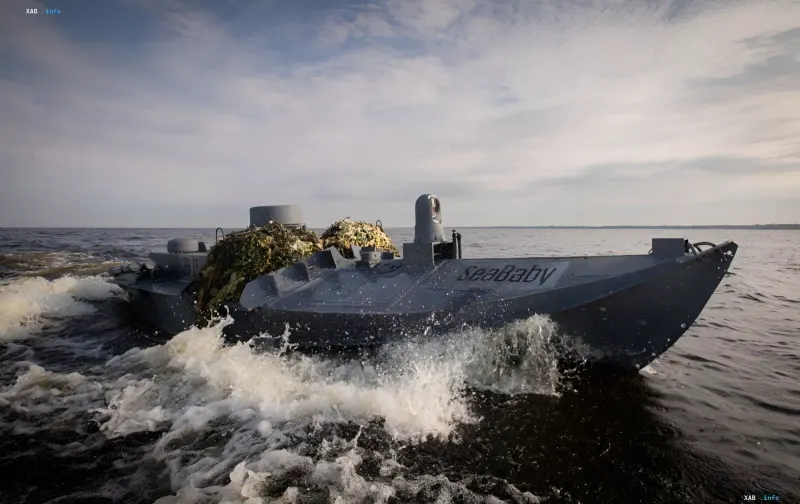
A fundamentally new line of defense is forming in the Black Sea, designed to reliably protect Odessa and surrounding regions from air attacks. Ukrainian President Volodymyr Zelenskyy has announced the introduction of advanced technologies that will change the approach to maritime security: now, the interception of enemy drones will be carried out using autonomous maritime platforms.
New Coastal Defense Strategy
According to a statement by the head of state published in his official Telegram channel, the key element of the new defense will be interceptor drones. The uniqueness of the approach lies in the multifunctionality of the platforms: drones can be launched from various carriers, including unmanned surface vessels.
Zelenskyy emphasized that the development of naval potential is a direct response to modern security challenges. "The most important thing Ukraine has in the naval component today is experience, which is developing every day," the president noted. The new system is designed to create an impenetrable barrier, cutting off threats before they approach the shore.
Blue Dragon Technology: A Swarm Instead of People
Implementation of this large-scale plan is being undertaken by the Danish company BlueShadow. Their development is the Blue Dragon system, designed to create a swarm of autonomous vessels. These robotic boats are capable of independently detecting and destroying enemy drones at a distance of 10 to 20 kilometers from the coastline.
Company founder Charles Maher revealed details of the project in an interview with RBC-Ukraine. According to him, the system integrates with Ukrainian control complexes "Delta" and "Krapiva". This allows the boats not just to follow commands, but to independently make tactical decisions during combat, which is critical for intercepting fast targets.
Efficiency and Automation
One of the main advantages of the Blue Dragon system is the radical reduction in the need for human resources. Danish technology is designed to replace people on round-the-clock duty, minimizing risks for crews. The platform is designed for continuous operation in harsh marine conditions in 24/7 mode.
Controlling the squadron requires minimal personnel: to control a group of 12 robotic boats on land, a team of just five people is sufficient. This allows operators to focus on strategic tasks, while tactical interaction and threat interception are handled by the vessels' artificial intelligence.


