
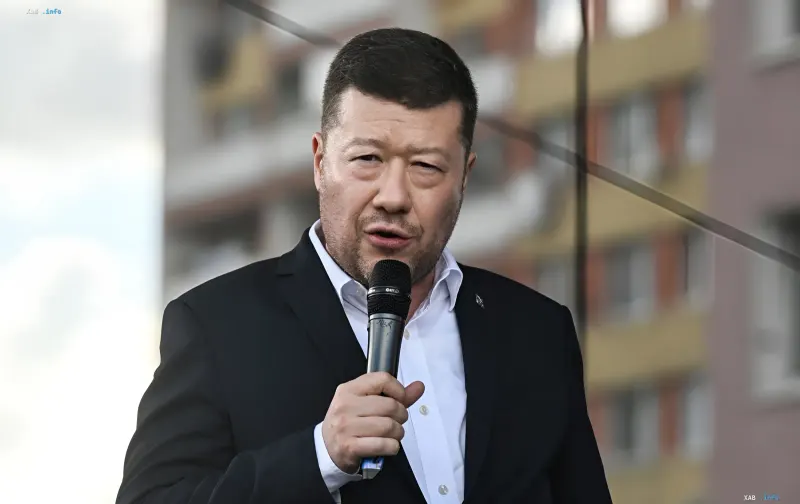
A political dispute has erupted in the Czech Republic regarding the future of Ukrainian refugees. Tomio Okamura, Chairman of the Freedom and Direct Democracy party (SPD) and the Chamber of Deputies of the Czech Republic, made a radical statement calling for the cancellation of temporary protection status for Ukrainian citizens residing in the country.
Tomio Okamura's radical position
The politician voiced his proposal during a discussion program on the Prima TV channel. Okamura did not resort to diplomatic phrasing, stating directly: "If it were up to me, I would immediately stop temporary protection." According to him, the reason lies in the oversaturation of the labor market and society, as well as the dissatisfaction of local residents.
The leader of the SPD claims that there are too many Ukrainians in the Czech Republic, which, in his opinion, causes social tension. Also, during the discussion, accusations were made against refugees regarding the abuse of social benefits.
Economic reality versus political slogans
However, Okamura's theses met with sharp refutation from representatives of other Czech parties. Politicians point to the critical role of Ukrainian labor in the functioning of key sectors of the country's economy. Without Ukrainians, according to Okamura's opponents, the Czech Republic will face a collapse in the construction industry, healthcare system, and social services.
In response to accusations of mass social parasitism, the Chairman of the TOP 09 party, Martin Kupka, cited official data from relevant ministries. According to statistics, cases of actual abuse of social benefits are isolated.
Figures and facts: who are the Ukrainians in the Czech Republic?
At the moment, about 400,000 Ukrainian refugees are officially registered in the Czech Republic. The structure of this group looks as follows:
- More than 175,000 people are officially employed and regularly pay taxes.
- A significant portion of the remaining number consists of children.
- The presence of such a large influx of Ukrainian refugees effectively exempts the Czech Republic from obligations under the EU migration pact, which requires relocating migrants from other regions.
Europe is changing the rules of the game
The situation in the Czech Republic is taking place against the backdrop of global changes in European Union policy. The EU plans to extend the temporary protection status for refugees after March 2027, however, the conditions of stay may become stricter.
Active discussions are taking place in the Council of the EU regarding the possible introduction of restrictions for men of mobilization age who plan to enter Europe for the first time. At the same time, the European Commission assured that the new rules will not apply to those who have already received protection status.
Crisis of expectations and return home
Parallel to political debates in Europe, the Ukrainian diaspora itself is experiencing a difficult period of adaptation. Long-term emigration forces many to think about repatriation. Statistics show that in a number of countries, the percentage of those wishing to return home remains high.
The main factors pushing Ukrainians to return are:
- Complex bureaucracy and a confusing tax system.
- Discrepancy between European lifestyle and initial expectations.
- Financial exhaustion and economic crisis.
A special shock is experienced by many in Germany, where instead of the expected digitalization, they are met with a "paper hell" and a conservative system, which emigrants call the "digital stone age". These realities, along with political pressure in countries like the Czech Republic, are forming a new agenda for millions of Ukrainians forced to seek refuge abroad.


