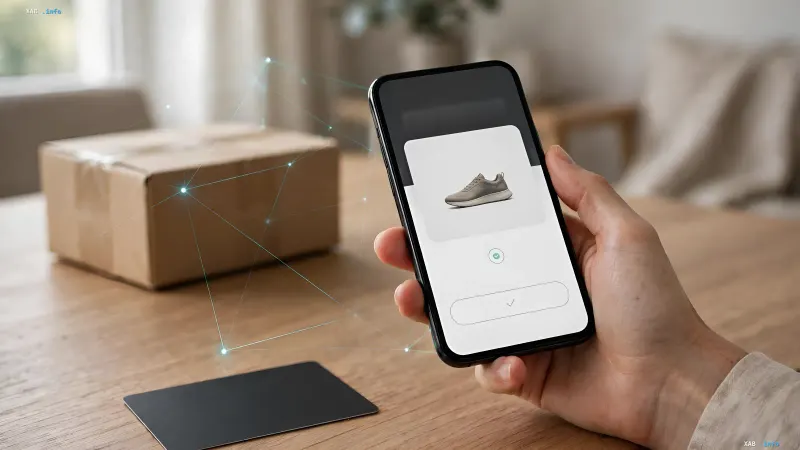
OpenAI has introduced ChatGPT Wallet, a payment feature that evolves AI agents from simple search assistants into active participants capable of completing purchases. The workflow is straightforward: the user links a bank card once, instructs the agent to find the desired item, and before payment, reviews the order details and confirms the transaction. On supported devices, biometric verification—Face ID or Touch ID—is used for authorization. Thus, the final decision remains with the human, while the agent handles the routine order processing.
Security Through Tokenization
A core element of the architecture is that card details are never passed to the agent itself. Instead, the payment network generates a special token—virtual payment data including a card number, security code, and expiration date tied to a specific transaction. The purchase is processed through standard card infrastructure, ensuring that cardholders retain their existing rewards programs and security protections. This allows for combining automated checkout with established card transaction security standards.
Partners and Limited Launch
At launch, OpenAI is partnering with American Express, Mastercard, and Visa; service documentation also indicates support for eligible Chase cards. Access is currently limited: ChatGPT Wallet is available to adult Pro subscribers in the United States with compatible American bank cards. The launch is intentionally restricted as the company aims to verify system performance in controlled conditions before expanding. OpenAI has also stated that it will not charge a commission on purchases during the initial phase; its current focus is on building relationships with merchants and payment networks.
The Path to Agentic Commerce
This launch continues OpenAI's ongoing efforts to turn ChatGPT into a full-fledged online shopping platform. In the fall of 2025, the company introduced Instant Checkout, though it later shifted the development focus of that feature. In March 2026, search and product comparison tools were updated, and now the next stage—ordering via a personal AI agent—has been added. In a broader context, other deals are strengthening the agentic payment ecosystem: according to industry reports, other payment players are involved in integrating the wallet into ChatGPT, including partnerships involving Visa and PayPal.
Barriers from Marketplaces
However, the capabilities of ChatGPT alone are not enough for this scenario: marketplaces must permit agents to interact with their sites and place orders. Some major companies are currently taking an opposing stance. United Airlines has announced it will block AI agents when booking flights, and Amazon restricts their access to purchases on its platform. OpenAI expects that stores and payment networks will need time to adapt their infrastructure for AI-agent-led commerce—and it is this period of adaptation that dictates the expansion pace of ChatGPT Wallet.