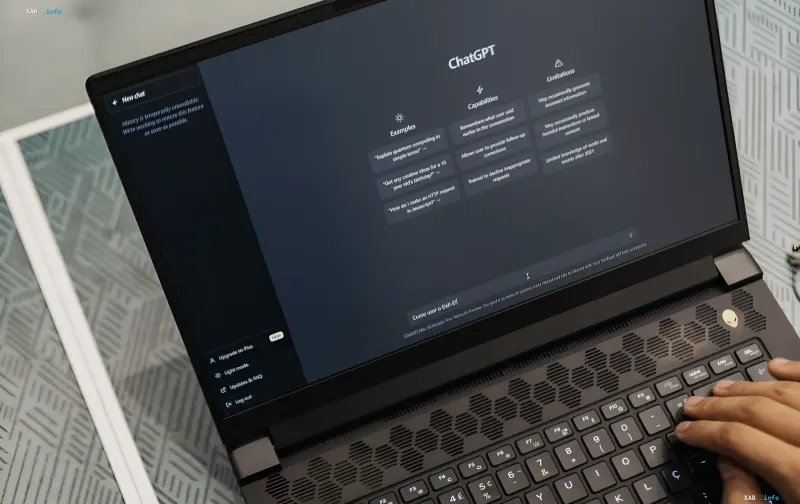
August 17, 2026 — OpenAI has unveiled a new feature for macOS users that fundamentally changes the approach to interacting with artificial intelligence. The tool, named Computer History, allows ChatGPT to analyze the user's activity history, turning routine operations into long-term memories for the neural network. However, as with previous major releases, the innovation has sparked heated debates regarding privacy and data security.
From simple chat to digital assistant: how Computer History works
The new feature, available to subscribers of Pro, Business, and Enterprise plans, aims to make the AI assistant context-aware. Computer History records user actions across various applications and websites, creating a chronological timeline of events. This enables ChatGPT not just to answer questions, but to recall the context of past work.
Users can ask follow-up questions, such as: "What exactly was I fixing in the code yesterday?" or "Where did I save last quarter's report?". Furthermore, by analyzing recurring patterns, the AI can suggest ready-made macros and automation scripts to speed up workflows. This transforms ChatGPT from a simple text generator into a full-fledged digital secretary that knows the owner's habits.
Technical architecture: why this is not Windows Recall
Immediately following the announcement, comparisons began to be drawn online with Microsoft's Windows Recall tool, which previously faced serious criticism for total surveillance. However, OpenAI emphasizes significant structural differences in its solution. Unlike Microsoft's concept, where logging was planned as standard, Computer History requires conscious user confirmation (opt-in) and is disabled by default.
The key difference lies in the data collection method. The OpenAI tool does not take screenshots, does not record the screen, and does not use the microphone. Information is collected exclusively through interactions: clicks, keyboard input, hotkeys, and system data from the Accessibility API. This allows users to flexibly configure lists of allowed or disabled applications, creating "whitelists" for data transfer to the bot.
Critical vulnerabilities: lack of encryption and risks
Despite claims of security, OpenAI's technical documentation has revealed serious nuances that are causing concern among cybersecurity experts. Specifically, it is stated that saved local files containing activity history are not encrypted. This means that any other programs running on the Mac under the same user account can freely read this data.
Additionally, there remains a risk of command injection: malicious instructions hidden in viewed web pages or documents could be read by the system and passed into the chat context. Given that data is transmitted in text format, attackers could use this to spoof context or inject malicious code into the automation chain.
Release geography and limitations
The Computer History feature is already available for macOS users; however, OpenAI has decided to limit the release geography. The tool is unavailable for users in the European Economic Area (EEA), the United Kingdom, and Switzerland. This decision is likely dictated by strict regulatory requirements for personal data processing and stringent privacy laws in these regions.