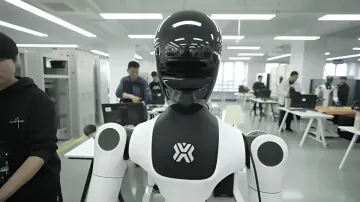
OpenAI has dissolved its dedicated robotics division, explaining the decision as a shift in concept. According to a company spokesperson, OpenAI is not abandoning the goal of creating general-purpose robots, but it sees no need to develop narrowly specialized AI models intended solely for robots, since universal models, in OpenAI's estimation, are fully capable of performing these functions. Thus, the company is effectively shifting its focus from a separate robotics branch to its flagship universal models.
From Specialization to Universality: How the Logic Changed
According to an OpenAI spokesperson, the key argument in favor of the restructuring was the unexpected success of the universal GPT-6 Astra model in performing certain robotics tasks. Earlier in the year, company researchers assumed that the development of this area would rely on the work of the Sora video generator, which is capable of simulating the physical world. However, it later turned out that OpenAI's advanced universal models could be directly applied to robotics. According to the company, this exact observation led to the dissolution of the dedicated team, with its specialists being reassigned to groups working on more general-purpose AI models.
How the Internal Restructuring Works
The robotics research group has been integrated into the core research division led by Director of Research Mark Chen. Meanwhile, applied robotics and hardware specialists have been transferred to the applied engineering division reporting to OpenAI President Greg Brockman. This structure means that robotics is no longer a separate direction, dissolving instead into general research and applied work on universal models.
Simulation Results and Their Limitations
Universal models are already being tested for robot control without additional training on robotics data. In such experiments, the model receives camera images, robot information, and access to an interface through which it can issue commands. In an Nvidia study, a GPT-6 Astra-based agent successfully completed 74.8% of object manipulation tasks; by comparison, the best published result for specialized robotics models in the same ranking was 51%. At the same time, it is important to note that the tests took place in simulation — the model controlled a virtual robot, so these figures cannot yet be transferred to real devices.
The Position of Startups and Academics
OpenAI's approach may cast doubt on the bet many robotics startups are placing on specialized models equipped with "spatial intelligence." At the same time, practical experience in operating robots and data gathered in real-world conditions retain independent value. Russ Tedrake, co-founder and CEO of Walden Robotics, noted that robotics companies have an advantage that AI labs lack: their robots are already gaining practical operating experience in real environments, such as factory floors. According to him, more advanced base models increase the value of object-specific data because they allow robots to learn from it faster.
What This Means for the Industry
Large universal models also have limitations: processing requests takes time, and using a cloud service requires a constant network connection. This is why Guanya Shi, assistant professor at the Robotics Institute at Carnegie Mellon University, believes that compact specialized models are still needed — they can run directly on a robot's onboard computer. Which approach will prove more successful in the long run remains unclear, noted Pete Florence, co-founder of Generalist, a startup developing universal AI models for robots. Thus, OpenAI's decision sparks a debate over whether the future of robotics belongs to universal "brains" or specialized onboard systems.