
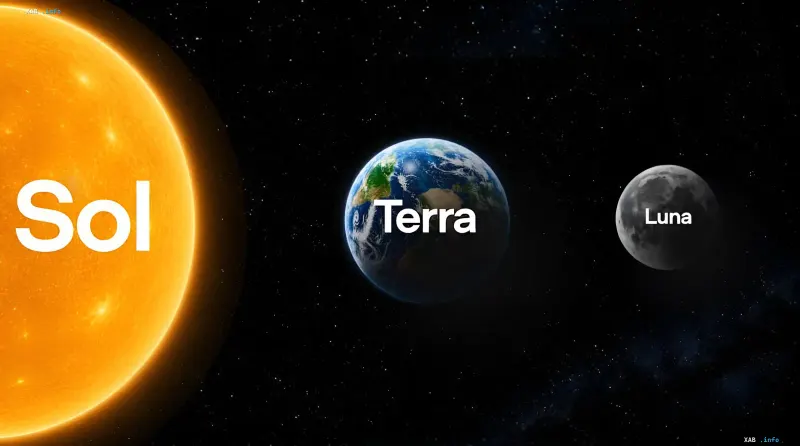
The American company OpenAI has taken a significant step in the evolution of artificial intelligence by unveiling a new generation of large language models — the GPT-5.6 family. This release marks not just a version update, but a fundamental rethinking of architecture and approaches to neural network classification. For the first time, instead of familiar marketing suffixes like Mini or Pro, developers have implemented a system of permanent categorical classes reflecting the computational power and purpose of the models.
The new lineup consists of three tiers: the flagship Sol, the balanced Terra, and the budget-friendly Luna. However, behind the technological breakthrough lies a strict regulatory reality: at this stage, access to these tools is strictly limited by the US government.
Technical Architecture and Economic Model
The GPT-5.6 family is designed to solve high-complexity tasks in the fields of autonomous programming, system administration, and cybersecurity. Each model has a fixed pricing per million tokens, allowing businesses to accurately forecast costs when integrating via API or the Codex platform.
The key characteristics and usage costs of the new classes are as follows:
- GPT-5.6 Sol (Flagship): A top-tier model optimized for deep analysis. Usage cost is $5 per 1 million input tokens and $30 per 1 million output tokens.
- GPT-5.6 Terra (Balance): Provides performance comparable to the previous GPT-5.5 version but reduces operational costs by half. Rate: $2.5 for input and $15 for output.
- GPT-5.6 Luna (Accessibility): A high-speed lightweight version designed for routine automated scenarios. The most affordable option: $1 for input and $6 for output.
Benchmark Results: Victory in Autonomous Planning
During specialized testing on the TerminalBench 2.1 benchmark, which evaluates AI capability for autonomous planning and management in command-line environments, the flagship Sol modification demonstrated outstanding results.
Using the standard reasoning algorithm, the model scored 88.8%. However, upon activating the advanced Sol Ultra mode, the result rose to 91.9%. For comparison, the competing solution Claude Mythos 5 by Anthropic scored 88% in a similar test. This confirms OpenAI's leadership in tasks requiring complex logical chains and engineering thinking.
New Data Processing Modes
A technological novelty of the GPT-5.6 architecture is the introduction of two variable request execution modes that change the approach to answer generation:
- Max Mode: Extends the time limit (reasoning effort) for hidden logical chains, allowing the model to construct more verifiable and accurate answers.
- Ultra Mode: Goes beyond isolated architecture by deploying a hierarchical network of parallel functioning sub-agents. This allows for the decomposition and resolution of ultra-complex engineering or biological tasks.
Regulatory Restrictions and Cybersecurity Status
Despite technological readiness, the mass launch of models is being held back by the White House's regulatory policy. According to OpenAI's internal Preparedness Framework, the Sol and Terra versions are classified as "High Risk" in categories of potential application in cybersecurity and biological threats.
The models demonstrate pronounced defensive capabilities, including vulnerability scanning and patch generation, making them a powerful tool requiring strict control. Consequently, US regulatory bodies have temporarily limited the user base to approximately twenty accredited corporate partners. The final formation of the regulatory framework is expected within the scope of a new Executive Order.
In an official statement, OpenAI emphasized that the current closed preview access format is not a permanent standard. The company's management acknowledges that temporary restrictions hinder the commercial use of advanced defensive IT tools by the global pool of developers; however, security remains the priority during the implementation phase.


